

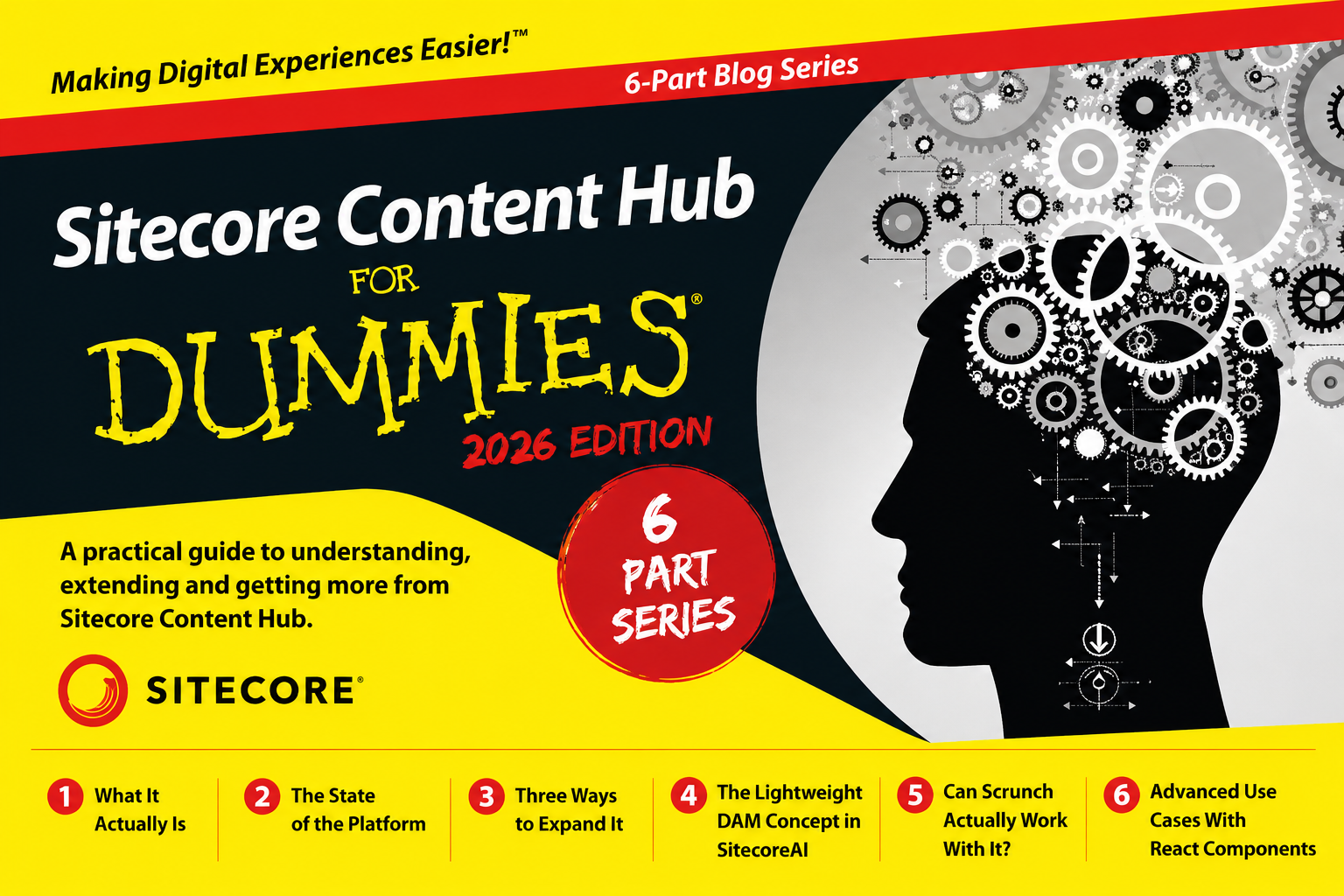

If Post 1 was “what is it,” this one is “why does it matter right now.” Because a lot has actually shifted this year, and it’s easy to miss unless you’re the sort of person reading Sitecore news or release notes for fun (like I do).
Three things are true about Content Hub in 2026 that weren’t true eighteen months ago.
It’s scoring better with analysts.
It’s getting pulled into a much bigger industry argument about AI and content ownership.
Also governance has stopped being a nice-to-have and started being the actual product story.
The scorecard has moved

Analyst positioning is a blunt instrument, but it’s still worth a glance. In October 2025, Gartner placed Sitecore in the Visionaries quadrant for Digital Asset Management. Strong vision, execution still catching up, which is a fair read on a DAM that’s still young next to old timers like Aprimo or Bynder.

By March 2026, Gartner named Sitecore a Leader in the Content Marketing Platform quadrant, positioned farthest right on Completeness of Vision of anyone evaluated.
Two quadrants. Two different scorecards. One platform showing up strong on both is the kind of thing that’s hard to fake, because DAM depth and CMP vision are genuinely different muscles. I’ve gone deeper on what that combination actually implies in a separate post, if you want the full argument.
The industry got weird, and Content Hub is in the middle of it
Here’s the bit that entry-level readers might have missed entirely: over the last few months, CMS and DAM vendors have started buying companies that have nothing to do with CMS or DAM.
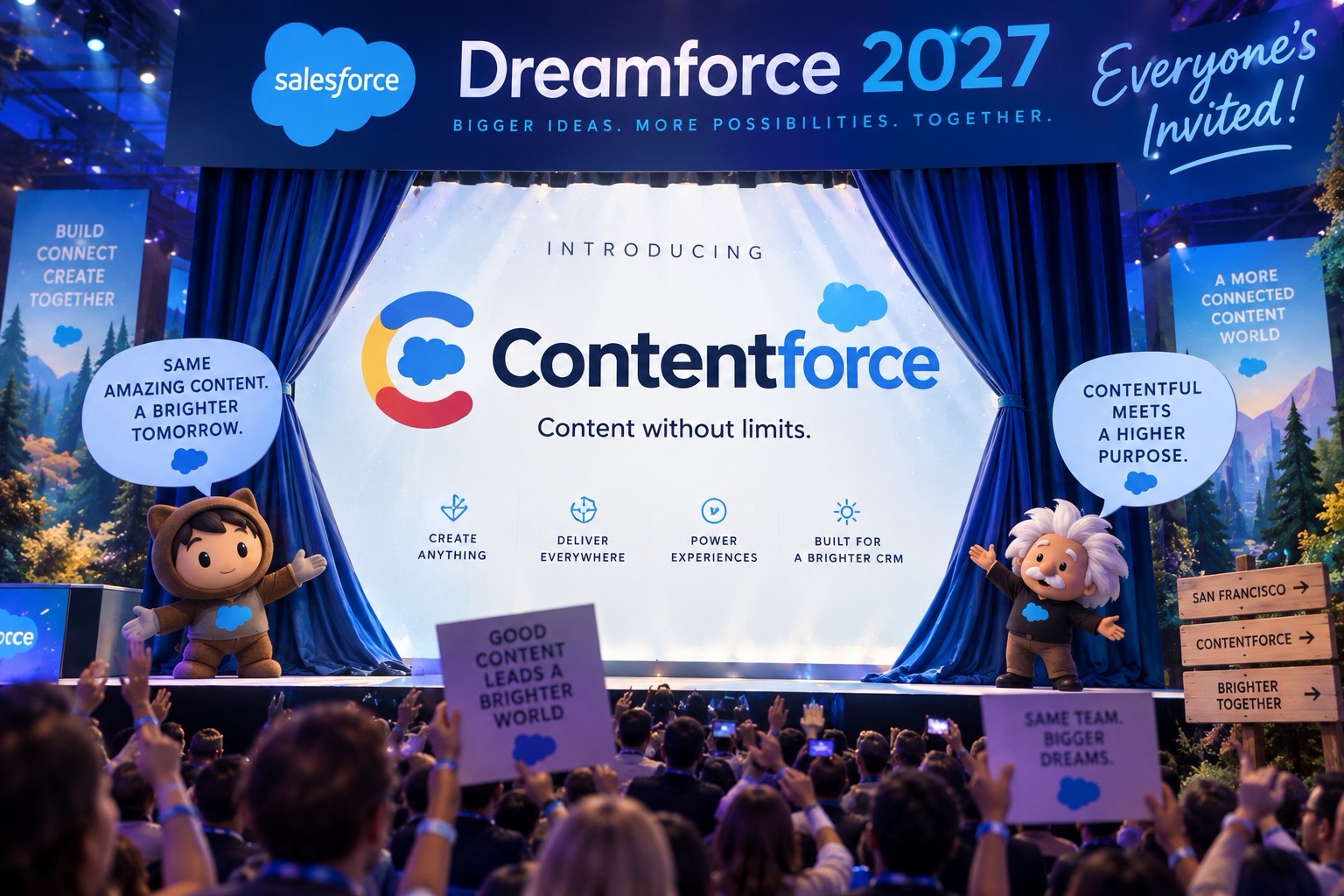
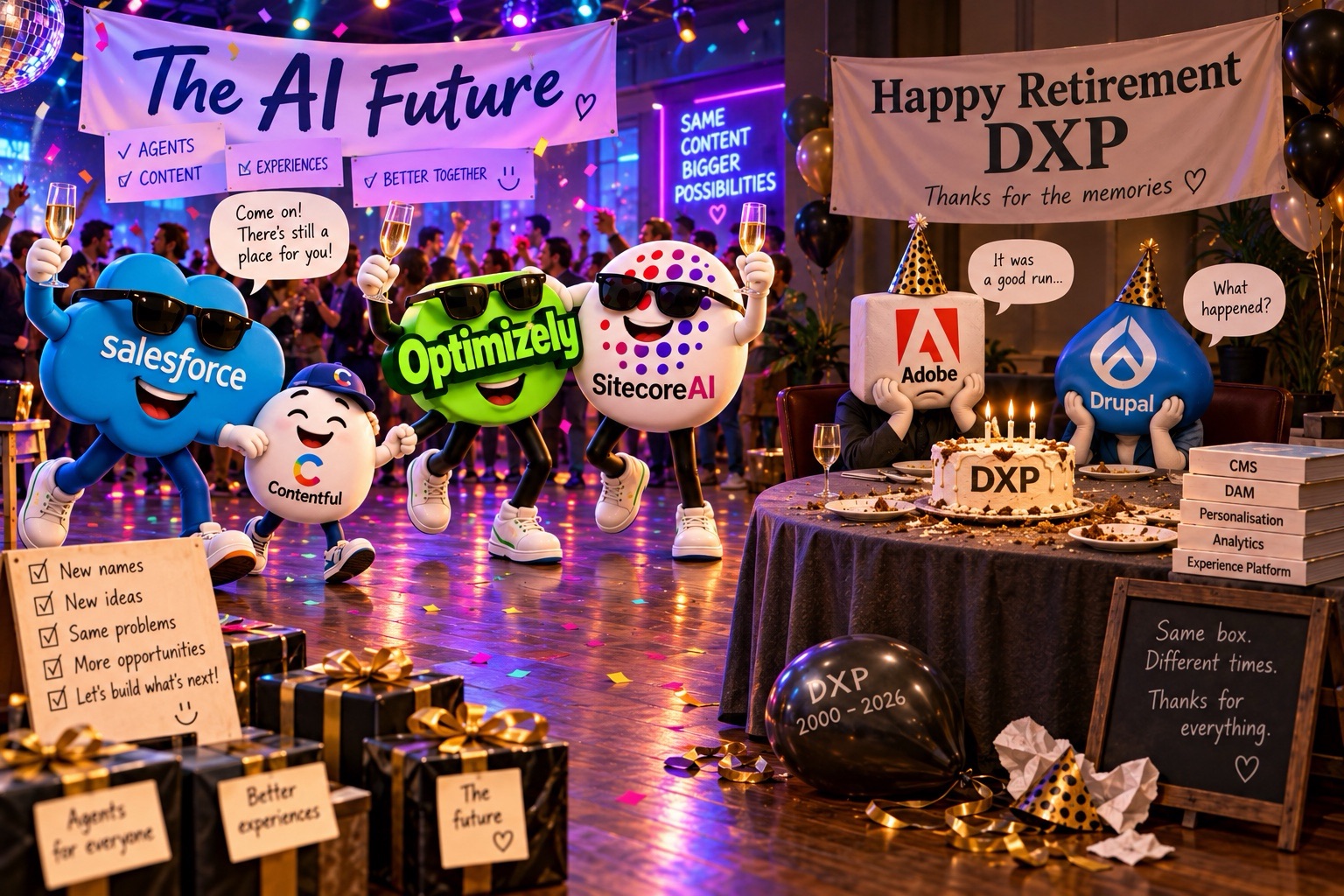
Salesforce bought Contentful. Then Sitecore bought Scrunch, an AI-search-visibility company.
On the surface these look like unrelated shopping sprees. They’re not. Every major platform seems to have quietly reached the same conclusion at once: the thing worth owning isn’t the content repository anymore, it’s the layer that understands how AI systems interpret and surface that content.
For Content Hub specifically, the Scrunch acquisition matters because it could/should plug directly into the taxonomy and knowledge graph work already sitting underneath DAM and PCM. You’ve got structured, tagged, rights-managed content on one side, and now a way to see how AI systems are actually representing that content to the outside world on the other.
That’s a meaningfully different pitch than “we store your assets.”
Governance stopped being paperwork
This is probably the biggest genuine shift, and it’s the one that matters most if you’re new to the platform.

Sitecore released its Digital Authenticity Index this year, consumer research measuring the gap between what people expect from brand experiences and what brands actually deliver.
The headline number is blunt: accuracy and honesty topped every other trust signal, with the vast majority of consumers rating it essential, and yet there’s a substantial double-digit gap between that expectation and what people believe brands are actually delivering.
Translate that into Content Hub terms and it means something specific: as AI-generated content scales up, “did a human check this” stops being a compliance checkbox and starts being a trust differentiator.
It shows up as concrete product direction, like Content Hub’s growing support for C2PA metadata, which lets teams see at a glance whether an asset was AI-generated or camera-captured, and trace what’s been edited along the way.
What this actually means if you’re using it (or about to)
Pulling all of that together, here’s the practical read for 2026:
- The DAM entry point is still the easiest way in, but the platform’s credibility now rests just as much on the CMP/planning side. Don’t evaluate Content Hub purely as a DAM and miss the operations layer.
- AI discovery is now part of the conversation, whether you asked for it or not. If your content strategy still assumes people find you through search results and nothing else, the Scrunch acquisition is a signal that Sitecore doesn’t think that assumption holds much longer.
- Governance and provenance are becoming sellable features, not just IT department concerns. If you’re the person justifying budget internally, “we can prove what’s AI-generated and what isn’t” is now a business case, not just a legal one.
None of this changes what Content Hub fundamentally is, the content operations platform from Post 1 is still exactly that. What’s changed is the weight given to different parts of it, and the company it’s now keeping in industry conversations that used to be about search engines and social media, not DAM taxonomies.
Where this leaves things
The platform that started as “a decent DAM with some marketing tools attached” is now showing up in conversations about AI trust, content authenticity, and knowledge layers that sit above the CMS entirely. That’s a genuinely different market position than the one it had two years ago.
Whether that’s the right direction depends on your organisation’s actual problems, same as always. But if you last looked at Content Hub purely as an asset library, it’s worth another look. The scope has grown considerably, and so has the ambition behind it.

Leave a Reply