


I’ve just spent a few days at Sitecore Symposoum in Orlando, and one idea kept coming back in every session: Sitecore is done asking marketers to come to the platform. It is going to where marketers already work.
That sounds like a small shift. It isn’t. After 13 years in the Sitecore world, I think it has made another big shift in how the product is positioned.
The old deal: log in and learn our tool

For most of the DXP era, the deal was simple. You buy a platform, you train your team, and your marketers learn where everything lives. Content here, assets there, analytics somewhere else. Every new capability meant another interface, another login and another thing to be trained on.
Anyone who has run a DXP rollout knows the pattern. The technology works, but adoption lags, because the marketer’s day is spent in a dozen other places: chat tools, email, AI assistants, and the systems the business already runs on.
The new deal: MarketingIQ meets you where you are

MarketingIQ is Sitecore’s answer. The way I understood it, it is a layer that sits across the stack and does two jobs: it holds brand intelligence, and it orchestrates marketing work.
The part that got me excited is how marketers reach it. Instead of a new destination, they can ask for things, approve work and receive signals and notifications from the tools they already have open. The connection runs through APIs and MCP, which means the intelligence can follow the marketer rather than the other way round.
Behind that front door, the model is easy to remember: Understand, Act, Grow.
- Understand. Use brand and business context, so every request starts from what the company actually knows about itself.
- Act. Coordinate the work, with agents carrying out tasks against shared context instead of each tool working in isolation.
- Grow. Learn from results and feed that back in, so the next piece of work is better than the last.

That loop matters. A lot of AI in marketing today is a clever single step, like generating a draft or tagging an image. A loop that understands, acts and learns is a different thing. It is closer to a teammate than a feature.
It also connects to the wider ecosystem. Sitecore’s content and asset platforms sit underneath, the business systems marketers already depend on can plug in, and Scrunch, now part of Sitecore, adds signals and discoverability on the outside. Intelligence on the way in, and visibility on the way out.
Why this matters now: discovery starts before the visit
It’s a simple three step story about how people find brands today.
- The question. Someone asks an assistant, and answers can arrive before a click.
- The comparison. An agent compares options, so your content has to be machine-readable.
- The proof. Your site proves the claim. Facts, evidence and control still matter.
The is important bit: fewer visits does not mean less influence. Your site becomes a trusted input to journeys that happen somewhere else.
I think that is exactly right, and it changes what a marketer is responsible for. You are no longer only optimising a destination. You are shaping what AI systems know and say about your brand before anyone arrives.
Traffic tells only part of the story
Visits, conversions and owned channels are what you can count. But there are three things you must also know:
- Representation. Is AI describing your brand accurately?
- Attribution. Where did the journey start, change or end?
- Accountability. Can you show who controlled the change?
If you work in a regulated industry or with a large brand, that last one should get your attention. When agents are acting on your behalf, being able to show who approved what is not a nice to have.
It also explains why bringing the tool to the marketer and bringing governance to the stack belong together. Making things easier to reach is only useful if it stays controlled.
What this means for the people who build

For architects and implementation partners, a few things stand out to me.
- Integration is the product. If the marketer’s front door is an assistant or a chat tool, the quality of the APIs and MCP connections behind it decides whether the experience is good or frustrating.
- Content has to be structured for machines as well as people. If an agent is comparing you with a competitor, clean, well modelled content is your advantage.
- Brand context becomes an asset. Guidelines, rules and approved knowledge need to live somewhere an agent can use them. That is a data modelling job, and a governance job.
- Measurement needs a rethink. Reporting that only counts visits will miss a growing share of influence.
These are not new skills for this community. They are the same skills, pointed at a different surface.
My take

I came into Symposium with team EPAM expecting incremental updates.
What I saw instead was a clear direction, no destination yet as no one knows but a direction.
Sitecore is moving from being a set of products that marketers visit to being an intelligence layer that works alongside them.
There is still plenty to prove.
A good set of vision slides or presentations are not the same as a good rollout.
Every customer will want the details of how this lands with them right now, not tomorrow.
But the direction is the right one. Marketers do not want another login or set of logins.
They want help, in the place where they already are, backed by the brand knowledge and controls the business needs.
I will be watching closely, and I’ll share more as I get hands on with it.
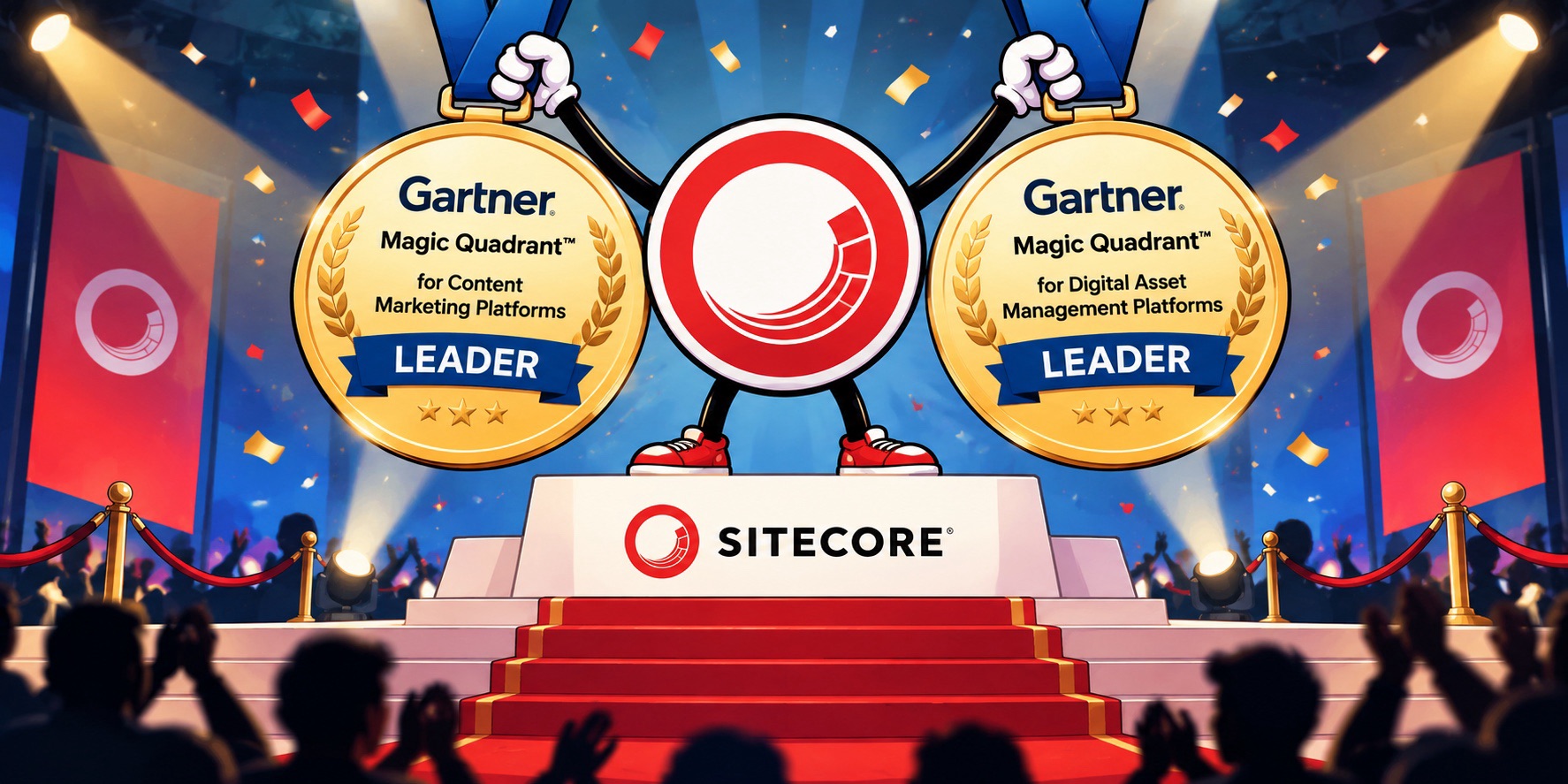
Also this is genius marketing



Leave a Reply