



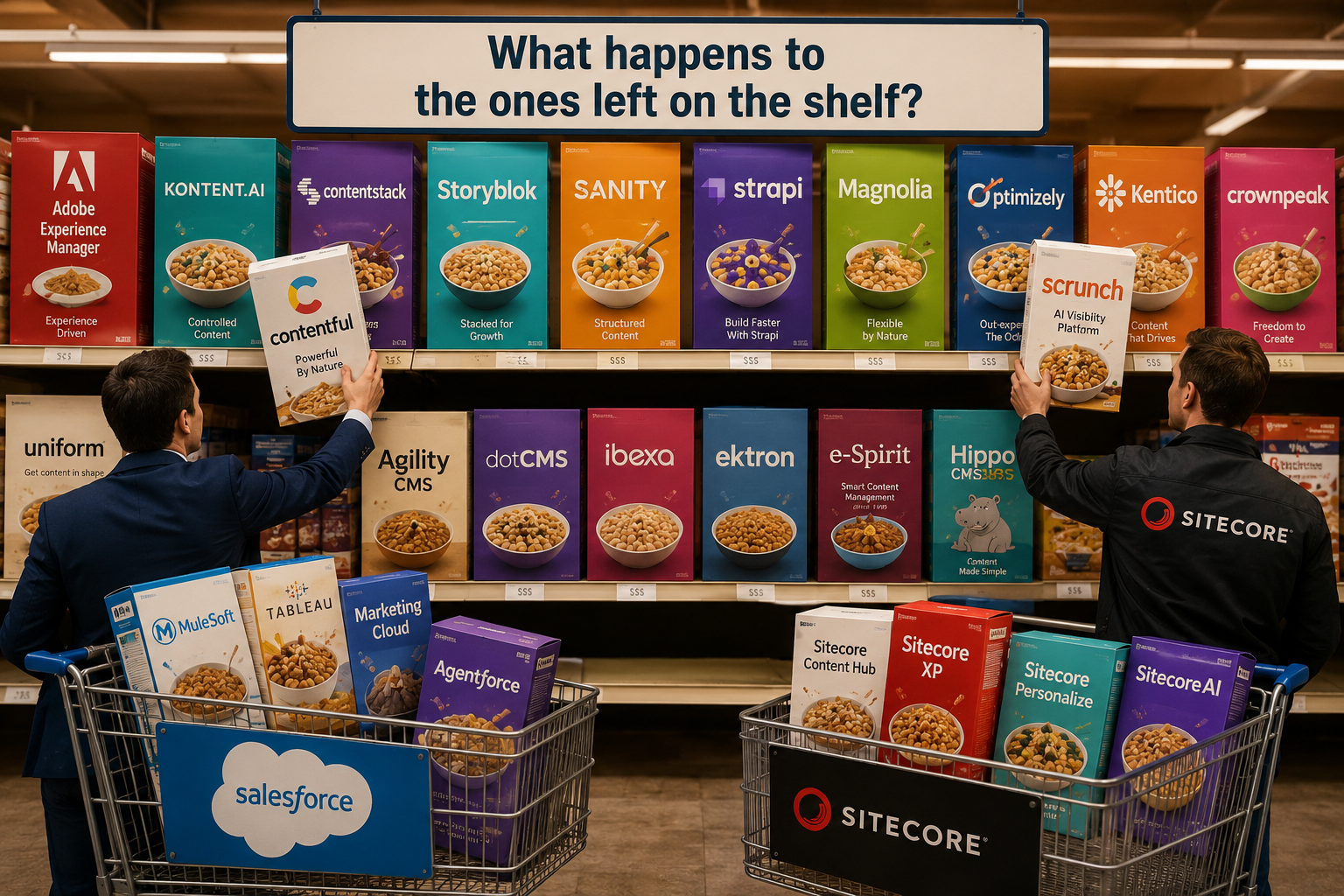
The last few weeks have seen two acquisitions that, on the surface, appear unrelated.
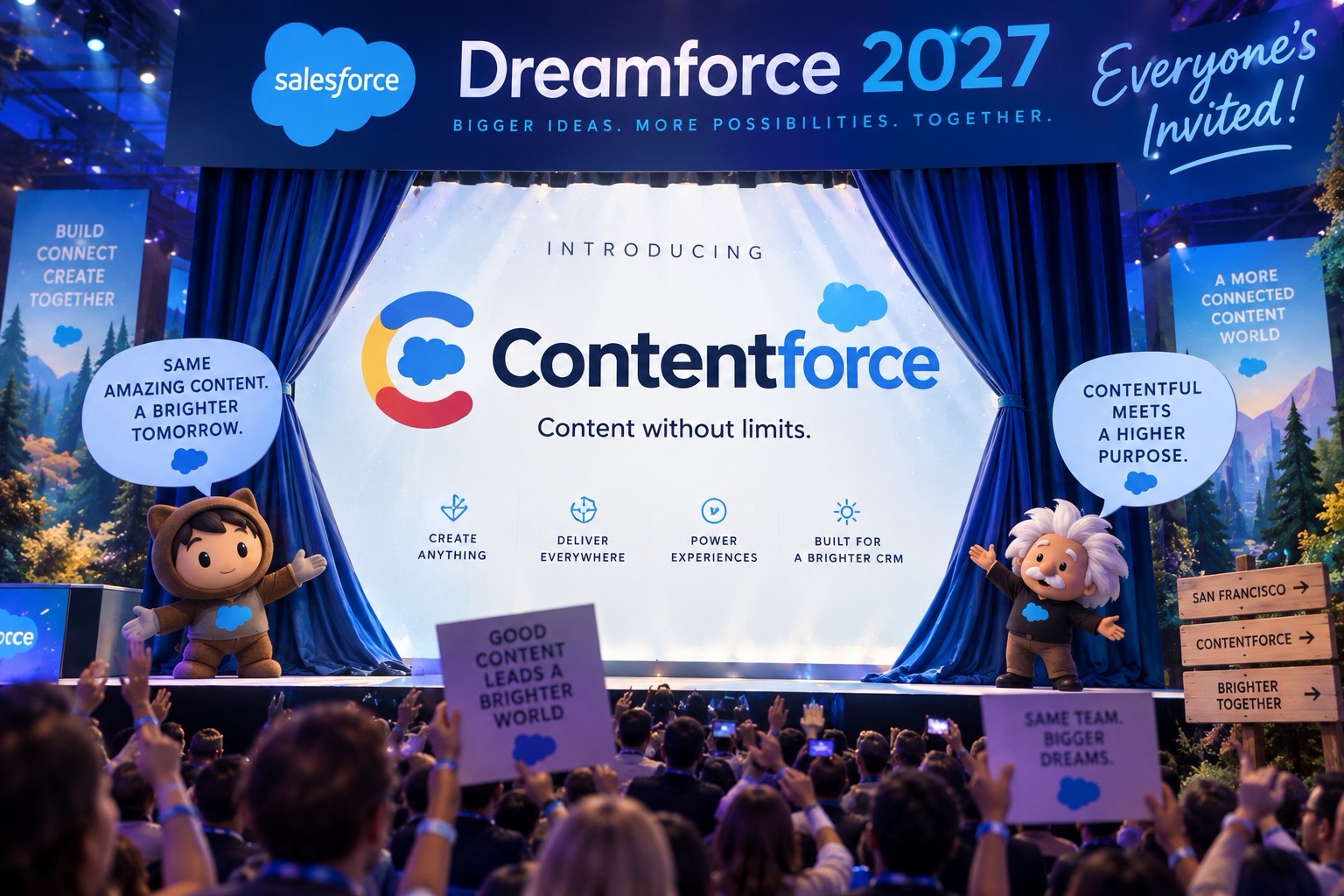
Salesforce acquired Contentful. Sitecore acquired Scrunch.


One strengthens Salesforce’s content capabilities. The other expands Sitecore’s position in AI-driven discovery. Yet what struck me most about both deals wasn’t what was bought. It was what wasn’t.
Neither company acquired another CMS.
For an industry that has spent the last two decades focused on content management, that feels significant.
Historically, the CMS sat at the centre of digital strategy. Organisations evaluated platforms based on publishing capabilities, workflows, personalisation features, templating flexibility, and increasingly headless delivery. Vendors competed fiercely because the ability to create and deliver content at scale was the primary challenge most businesses were trying to solve.
Today, that challenge is largely solved.
Whether you’re looking at Sitecore, Adobe, Contentful, Optimizely, Contentstack, Storyblok, or any other leading platform, the fundamentals are well understood.
They all create content, manage workflows, support APIs, and deliver experiences across multiple channels. The differences still matter, but they are no longer where the market sees its greatest opportunity.
Instead, the focus appears to be shifting towards the capabilities that sit around the CMS.
Salesforce’s acquisition of Contentful brings content closer to customer data and the broader Agentforce vision.
Sitecore’s acquisition of Scrunch brings content closer to AI visibility and understanding. Different strategies, certainly, but both point towards the same conclusion: content management alone is no longer enough.
The questions organisations are asking have evolved. Five years ago, many digital transformation programmes started by selecting a CMS.
Increasingly now, the discussion begins elsewhere.
How does content connect to customer context?
How does AI understand and represent our brand?
How do agents retrieve trusted information?
How do we maintain consistency across websites, mobile applications, AI assistants, search experiences, and channels that may not even exist yet?
These are not publishing problems. They are intelligence problems.
That distinction matters because it changes where vendors invest and where organisations create value. The future competitive advantage is unlikely to come from a better page editor or a more sophisticated workflow engine. It will come from understanding customers, content, relationships, intent, and the growing number of systems consuming information on behalf of users.
Content remains essential
In fact, it may be more important than ever.
But the CMS is increasingly becoming one component within a much broader ecosystem that includes customer data, content operations, AI visibility, knowledge management, and agent-based experiences.
Viewed through that lens, these acquisitions are less about individual products and more about market direction. The interesting question isn’t why Salesforce bought Contentful or why Sitecore bought Scrunch. It’s why major platform vendors are increasingly looking beyond traditional CMS capabilities in the first place.
Perhaps the clearest signal from both acquisitions is that the next decade of innovation won’t be centred on managing content.

It will be centred on helping machines, agents, and AI systems understand it.


Leave a Reply