


I recently read a Forbes article titled ‘The 60% Problem’ that really got me thinking.
The summary is more people turn to AI tools like ChatGPT, Gemini, and others to get their answers, traditional website traffic is quietly vanishing. In some cases, by as much as 60%.
That’s not a gentle dip – that’s a cliff edge.

This wasn’t the first time I had heard about this. At an in person user group recently another member mentioned that they had seen the same similar over the past 12 months for their corporate website.
And as someone who’s spent a lot of time thinking about websites, content, digital experience, and how we create for discovery, it got me wondering:
What does ‘content’ even mean in a world where no one clicks anymore?
AI isn’t just changing how we search – It’s Replacing It
When I think about how I search today, I realise I’ve already made the switch myself. I ask ChatGPT for summaries, product advice (you can never have enough golf clubs), even them really troubling coding questions that have stumped me for hours.
I still Google for nearly everything, but as Google has added its AI overview to every search result I rarely go past the first page. I am using it on a daily basis and I still browse to sites but it’s pretty accurate for me.
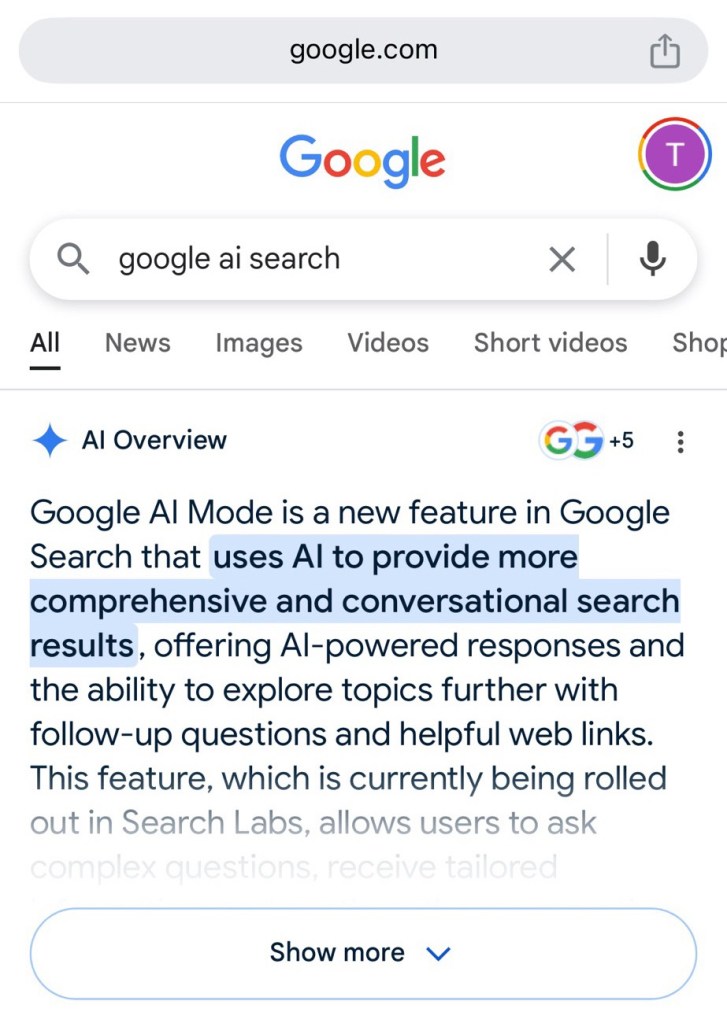
That’s the same behavior Forbes is calling out. But the big implication is this:
We’ve built websites for humans. But now, we need to build content for machines that answer humans.
If your content isn’t structured, clear, and authoritative, it doesn’t just rank lower. It disappears from the conversation entirely.
Traditional SEO Isn’t Enough Anymore
I’ve worked on enough digital projects to see how much energy goes into classic SEO – from optimising H1s and meta tags to backlink strategies and performance tuning. That work isn’t wasted. But I’m starting to feel like it’s only half the picture now.
Ranking #1 on Google doesn’t help much if the user never sees the link because an AI already answered their question.
That’s the uncomfortable truth this article surfaces. And it’s one I think we’re only just beginning to grapple with.
What Businesses Can (and maybe should) Do Differently
So what does building content for an AI-first world actually look like?
Here’s what I’m starting to believe:
We need to write for summarisation
If AI is going to paraphrase content, we need to design for that. That means:
- Leading with the point.
- Structuring ideas clearly.
- Using consistent, recognisable phrasing.
Schema and metadata aren’t optional anymore
It’s not just about helping Google. Structured data (like Schema.org markup) is how AI understands what your content is.
Brand attribution has to be earned – or engineered
Most AI tools don’t cite sources unless the original content stands out. If you want your brand to be mentioned, you need to:
- Write with authority.
- Be linked to expert voices.
- Publish in high-trust places (not just your own site).
We need to measure more than traffic
This one’s hard. But if 60% of your audience never visits your site anymore, maybe your metrics need to shift to:
- Mentions in AI responses
- API usage of your content
- Influence, not just visits
This Isn’t the Death of Content – It’s the Death of Lazy Content

The worst thing you can takeaway from this might be that content doesn’t matter anymore.
It does.
But the bar is higher. AI tools won’t regurgitate fluff. They won’t highlight the fifth “10 tips” article in a crowded marketplace.
They will find the clear, the authoritative, the structured – and ignore the rest.
Final Thought: You’re Already Training the Machines
If you create content today, you’re not just informing people – you’re helping train the systems that will eventually answer for you.
This is a massive responsibility.

And a huge opportunity.
The Forbes article paints a bleak picture on the surface. But underneath it, I see a call to action:
Let’s stop writing for clicks – and start writing for relevance in the age of AI.




 Tim's Blog
Leave a reply to From SEO to GEO: The Content Marketing Revolution I saw coming early in the year – Tim's Blog Cancel reply