

Sitecore Content Hub is an absolute powerhouse. Not only does it have amazing features it’s really flexible to extend giving users with additional functionality and capabilities.
Today I wanted to write a post on an area. It isn’t as widely used as the DAM. However, it offers so much.
I want to give you a look at the Content Management Platform (CMP). Sitecore describe it as a way to plan, manage and collaborate on your content strategy.
I feel it’s a really a content creation and assembly platform that has advanced asset capabilities in a powerful ecosystem yet easy to use UI and interface.

What is CMP?
Imagine you are a global brand that creates content not only for one website all of your sub brands.

Now you have content everywhere and anywhere. Some pieces follow process, most probably won’t. Duplication will also be a massive issue where content is created in silos multiple times.
The above would be even complex by introducing multiple languages. Every country will have their own website that they don’t want managed by someone else. The image above just keeps growing and becoming unimaginable.
The problem above is what CMP is designed to solve. It’s about building content atoms and re using them across each of your channels. Allowing users to localize master content ideally automatically to get content out not only quicker but correctly.
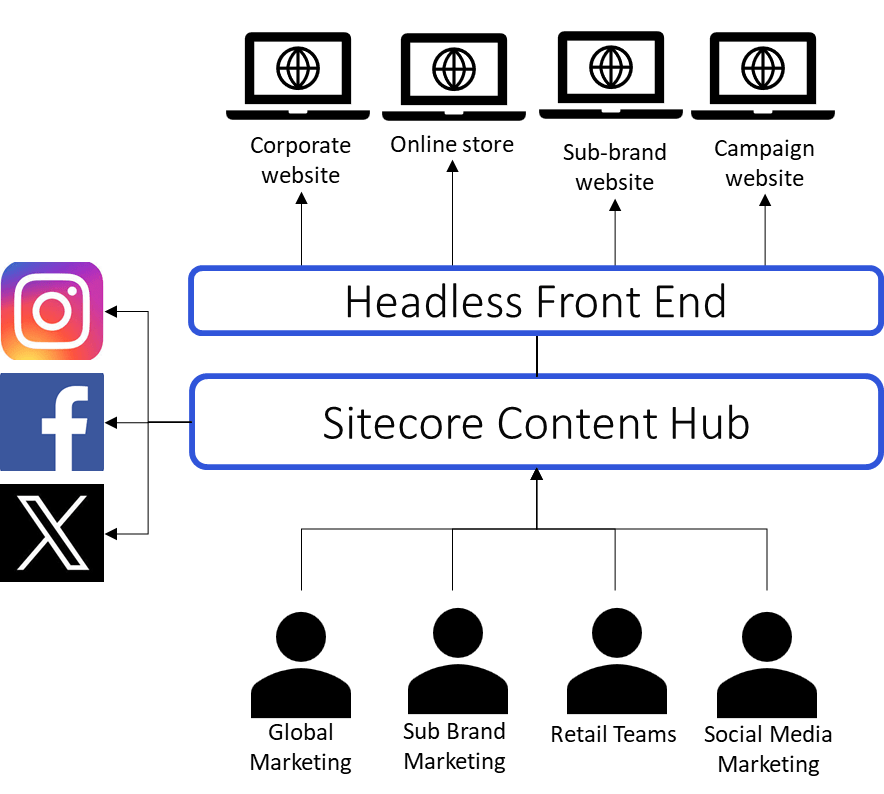
In addition the above would promote re use and allow a reduction in the number and variety of differences. Target platforms can stay as they are but they will retrieve content from one source of truth.
I recently wrote a blog on the topic of Content Variations and Versions. It explains how this problem can be tackled.
CMP – 5 key points
1. Flexible Content Modelling
Content Hub has a powered free modelling capability which means you can model anything you need to. It means you can extend or add to whats in place with CMP to get it just right

2. Headless ready
Sitecore Content Hub has a GraphQL (structured data query) endpoint for delivery. That means your front end application can talk to graph. OOTB it doesn’t have a page builder, however to counter I built my own and also some sites don’t require a page builder.
3. Advanced workflow
One of Content Hubs stand out features is the workflow capability. You can configure every aspect and the combining that with its internal scripting or by using Sitecore Connect. Easily configure advanced workflow cases to suit your needs.

4. Versions and Variations
This is an absolute stand out feature for me and I have blogged about this before. Literally users can create new versions and linked variations easily in a few clicks.

5. Single platform with many features
While DAM is a core feature it’s actually the other aspects that enable customers to get more. Being a single platform that orchestrates everything is a major selling point to me.

Conclusion
Content and assets are the foundation of any business. Content Hub has the perfect mix of capabilities that can help businesses grow and succeed.
Couple this with the flexibility of Content Hub and you have an unbeatable ecosystem that can deliver for you.
CMS and DXP platforms have evolved over the past 5 years and are better than ever. However businesses have had to evolve at a much faster rate in the past few years, technically they are consuming change at a faster rate and want more. Also with costs being so high it’s better for businesses to reduce platforms that offer duplicated features.
CMP platform’s like Sitecore Content Hub are the future and will sit alongside other composable products to offer best of breed capabilities.
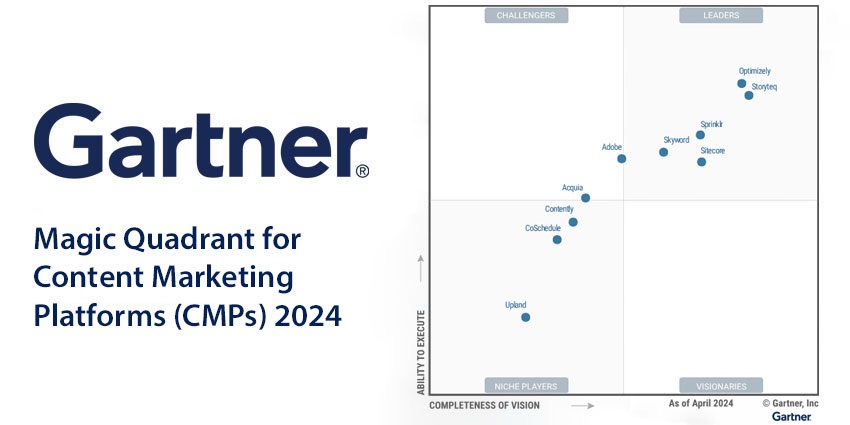
Also Sitecore was named a leader by Gartner in 2024 for CMP platforms which i think shows they are getting something right.
Please reach out if you have any questions on how this could help your business.



 Tim's Blog
Leave a Reply