

Most organisations still think in the old categories: CMS for content, DAM for assets, DXP for experiences. These tools solved real problems at the time, but the way we work with content has changed completely.
Today, teams share content across multiple channels with loads of different formats and timelines. Content that was built for one reason can be used in other places.
The trouble is the tools haven’t kept up with the needs of users today.
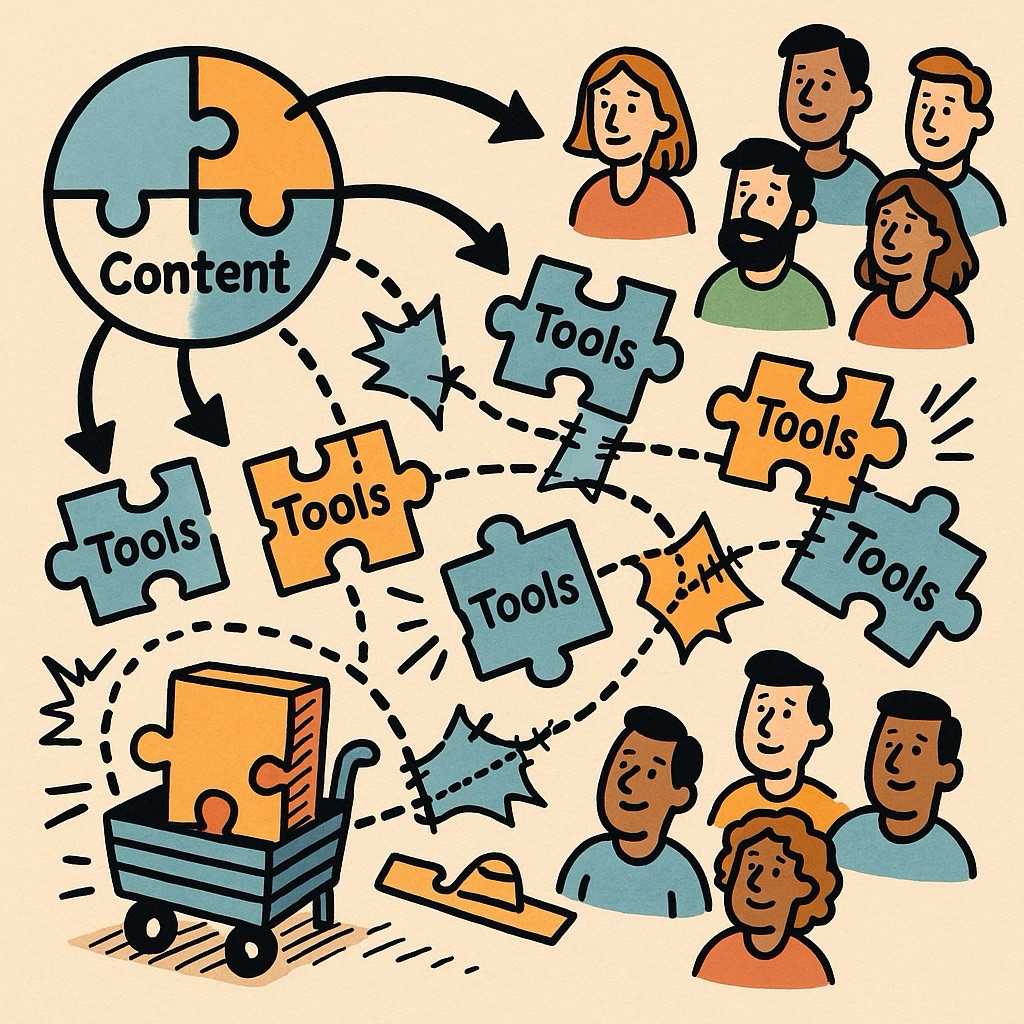
Everything is fragmented, duplicated and stitched together with normally a high level of manual effort.
We’ve reached a point where adding more tools doesn’t help.
This isn’t a new idea – it’s an emerging industry direction
Some platforms are already positioning themselves around this concept. Sanity, for example, describes its product as a “Content Operating System”. It combines structured content, workflows, APIs, and AI-driven automation into a single environment.
That’s an important signal.
But the bigger shift isn’t about one product. It’s architectural.
Across enterprise organisations, a new operational layer is starting to form above CMS, DAM, personalisation, search and DXP platforms. It connects them, standardises how content is modelled, introduces shared workflows, and enables AI to act across the full lifecycle.
That’s the idea behind a Content Operations System
Why CMS, DAM and DXP Don’t Exactly Fit the World We Work In Today
Originally, each system had a simple job:
- CMS: store content and give editors a way to manage website pages
- DAM: keep assets organised and handle rights and versions
- DXP: personalise and optimise the digital experience
These roles made sense when the website was the main channel and marketing teams followed a linear process:
Create > Review > Publish.

That world has gone and it’s evolving all the time.
Now you have combinations or all of the below:
- Websites
- Apps
- Marketplaces
- Paid Media
- Social
- Emails
- AI
- Retail Screens
- Chat Interfaces
- Global Regions
- Multiple Brands
- Compliance and Governance requirements
Teams jump between tools, copy content everywhere, and repeat the same work for each channel.
Nothing shares metadata.
Nothing shares relationships.
Nothing understands how content flows.
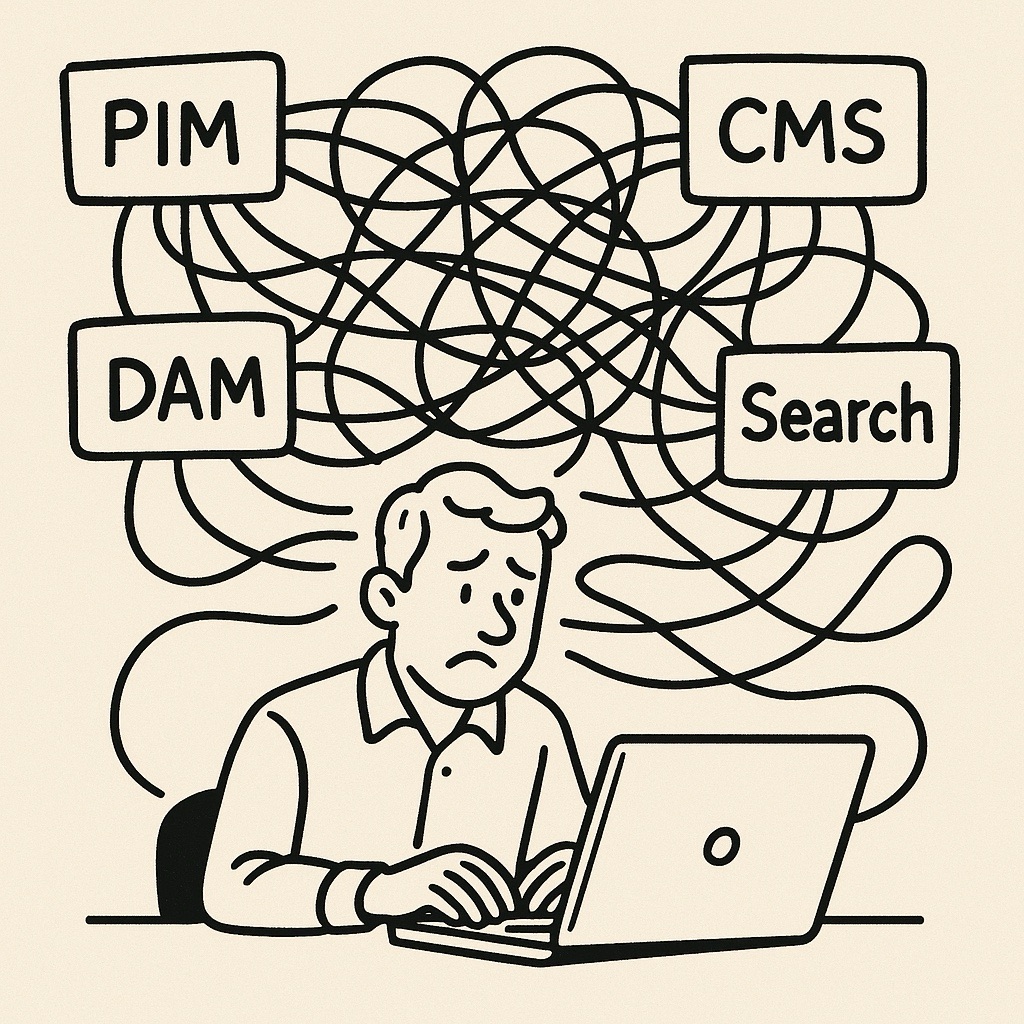
You end up with:
- Duplicate versions of the same product text
- Brand tone drifting over time
- Assets uploaded everywhere
- Disconnected approvals
- Search data being manipulated in multiple places just to see it in one place
- Teams fixing the same issues again and again
These systems weren’t designed to work together; in fact, they were developed independently, trying to solve to user problems. A lot of integration work is needed. This can lead to a series of compatibility issues. These issues then hinder their integration and overall functionality.
This lack of cohesion creates challenges for users. They expect and want seamless interaction between the systems in various environments. This situation ultimately results in inefficiencies and frustration.
They were built to solve individual problems, not the bigger picture.
Content Has Become a Supply Chain
If you map the real journey of content inside a modern organisation, you will find it isn’t a straight line. It goes from authoring to publishing in a zig zag depending on who needs to approve.
It’s a network:
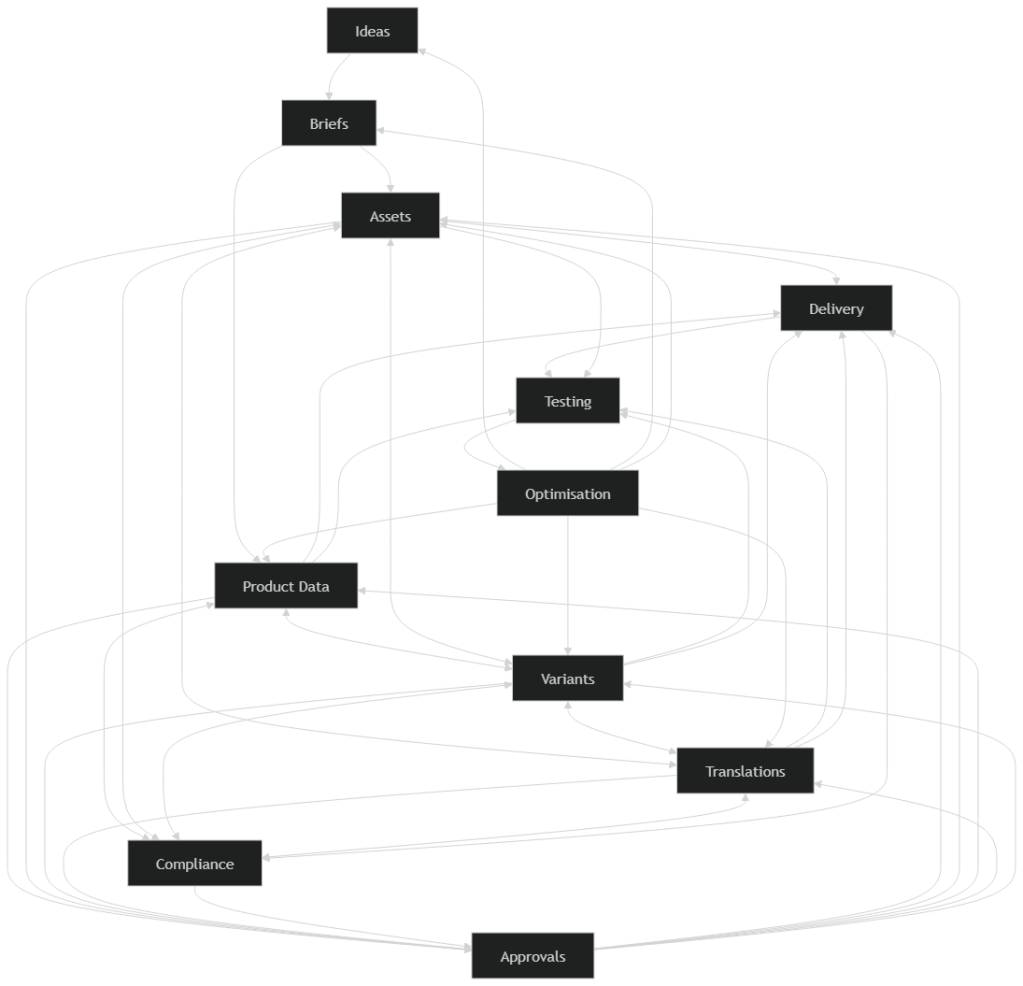
Every piece of content is touched by multiple people, tools and processes. Most teams don’t notice this until the volume scales and they feel the drag.

Content is no longer a page, is is an operation.
This is the gap the old categories can’t fill.
What a Content Operations System Actually Is
A Content Operations System (COS) is the layer that sits above CMS, DAM and DXP. It doesn’t replace them on day one. It unifies them.
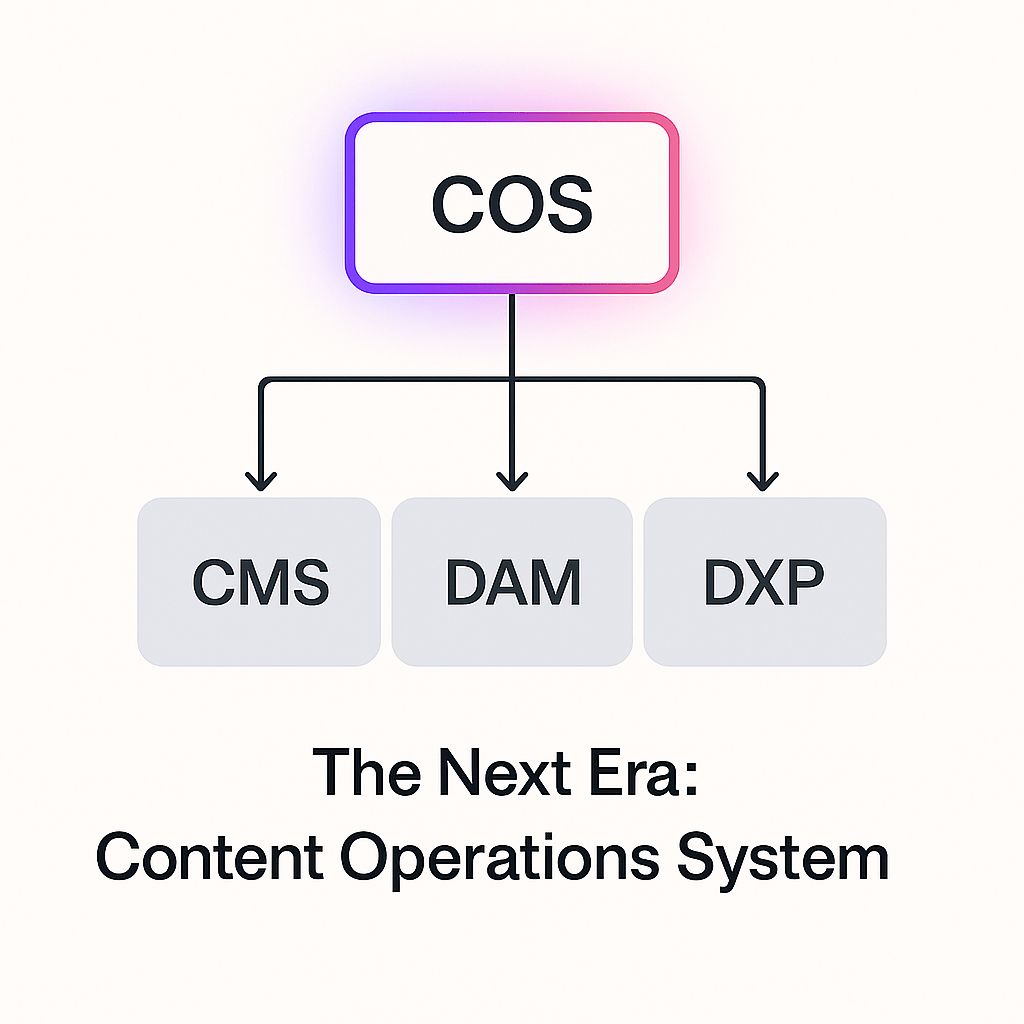
It’s important to separate the idea from any single vendor.
Some companies are building products that aim to be a Content Operating System. Others will evolve toward it from CMS, DAM and personalisation platforms. In many enterprises, it will emerge by connecting existing tools rather than replacing them.
The pattern matters more than the product:
- A shared content model
- A unified graph of content and relationships
- Operational workflows across teams
- Governance and compliance embedded in the lifecycle
- AI acting on content as an operational asset
This is less a tool, more a shift in how the stack is organised.
You stop managing content everywhere and start orchestrating it centrally.
We’re starting to see platforms evolve toward this model
Sitecore, Adobe, Sanity, and composable stacks are evolving beyond traditional CMS capabilities. They are moving toward operational layers that manage content as a system rather than a repository.
AI, workflow orchestration, structured content models and shared data layers are the foundations.
The vendor implementations will differ. The direction is consistent.
One platform. Endless possibilities – it’s a cloud-native platform. It brings together creation, management, and approvals. It also consolidates assets, intelligence, and delivery all in one place.
What This Means for Teams Today
A Content Operations System solves problems people feel every day:
Consistency becomes automatic
Variants, regional versions, tone and messaging stop drifting.
Governance happens before publishing
Compliance checks run during creation, not after.
Technology becomes simpler, not more complex
Instead of adding new point solutions, everything sits in one unified platform.
Content stops being duplicated
You update one source and the change flows through every channel.
Campaigns scale without overtime
Agents build versions, flag issues and prepare assets.
Teams focus on decisions, not admin
Most of the heavy lifting happens behind the scenes.
This is how content should have always worked, but the technology finally exists to make it real.
The Future Is a Unified Content Layer
The industry will keep using CMS, DAM and DXP as terms and they won’t disappear overnight. But the real value for brands now comes from the layer that sits above them:
One Model
One Graph
One Paragraph
One Intelligence System
One Operational Engine
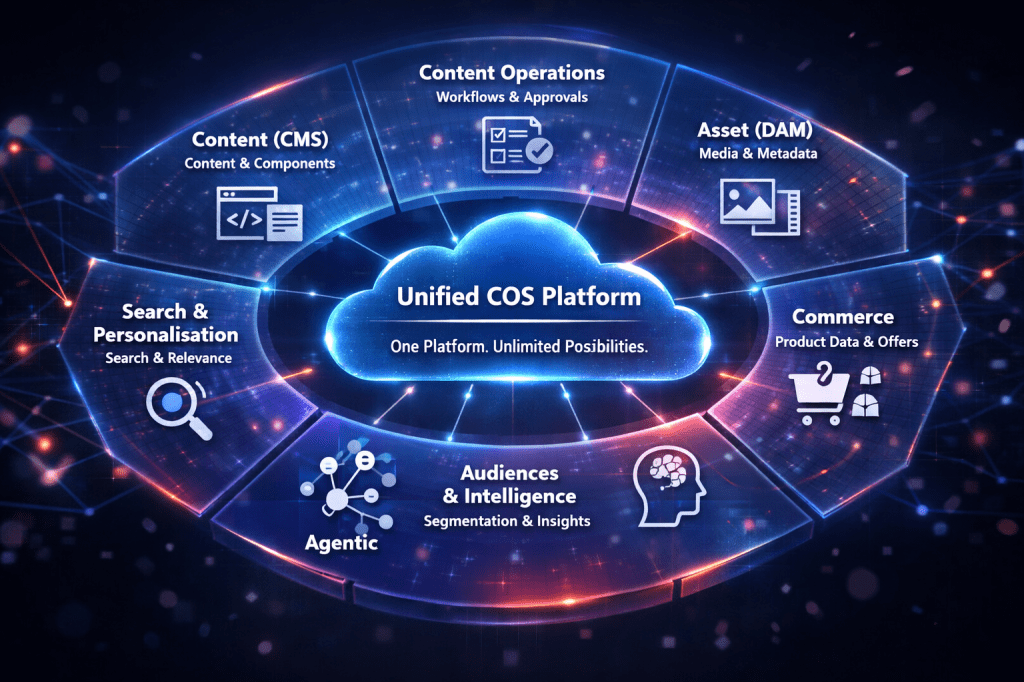
That’s the Content Operations System.
If you’re considering the future of your content, this layer will matter most as it directly influences how your audience engages with your material. This part is vital for your digital experience stack. It shapes the interaction dynamics. It ensures that your content not only reaches your target but also resonates with them on a deeper level.
As technology evolves, understanding this layer becomes essential. It helps enhance user engagement. It also drives meaningful connections that can elevate your brand’s presence in the digital landscape.


 Tim's Blog
Leave a Reply