

I’ll start here with this is entirely my thoughts and I know the power of Content Hubs knowledge graph, this is wishful thinking.
However I remember suggesting the Roger Connolly back at Sugcon 2023 in Malaga – imagine if you had Content Hubs as the content store then bolted pages and components on top.
Fast forward to today basically SitecoreAI is unifying content and assets.

Let’s start with what a knowledge graph is.
What is a Knowledge Graph?
Most teams think in terms of schemas, fields and folders, but that model only gets you so far.
A knowledge graph takes a different view. It focuses on relationships. Instead of storing content in boxes, a graph would map:
- How assets relate to products
- How products link to variants
- How those variants connect to regions and channels
- How workflows, rights and translations surround everything
The power isn’t in the individual items.
It’s in the network between them, I built this for Content Hubs in 2025.
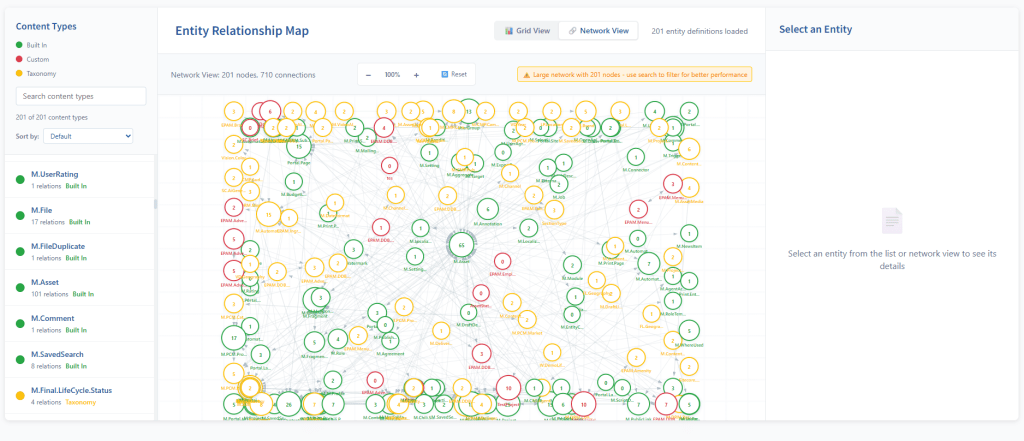
Content Hub already embraces this model better than almost any platform in the market.
Why the Graph Matters Now
Content Hub’s graph isn’t just a convenience feature. It solves a problem every enterprise has – Content Breakage.
Content doesn’t break because of the thing you touch, it breaks because of something connected to it.
With a connected graph – A name change, a rights expiry or a taxonomy update can cascade across pages, feeds, campaigns and channels.
The graph gives the system the ability to see:
- Where something is used
- What depends on it
- Who owns it
- Which channels it touches
- Which risks sit around it
For everyone else (unless you’re using Content Hub) this is information you currently stitched together by hand or totally missed as unaware.
What Happens if SitecoreAI Adopts the Graph as the Backbone
This is the pivot.
If SitecoreAI brings Content Hub’s graph to the platform layer, the CMS stops being item-based and becomes relationship-aware.
Updating a component stops being a local action. The system instantly knows:
- It’s dependencies
- It’s consumers
- It’s channel impact
- It’s translation footprint
- It’s regulatory or rights constraints
This unlocks a CMS that behaves like part of the wider organisation, not an isolated authoring tool.
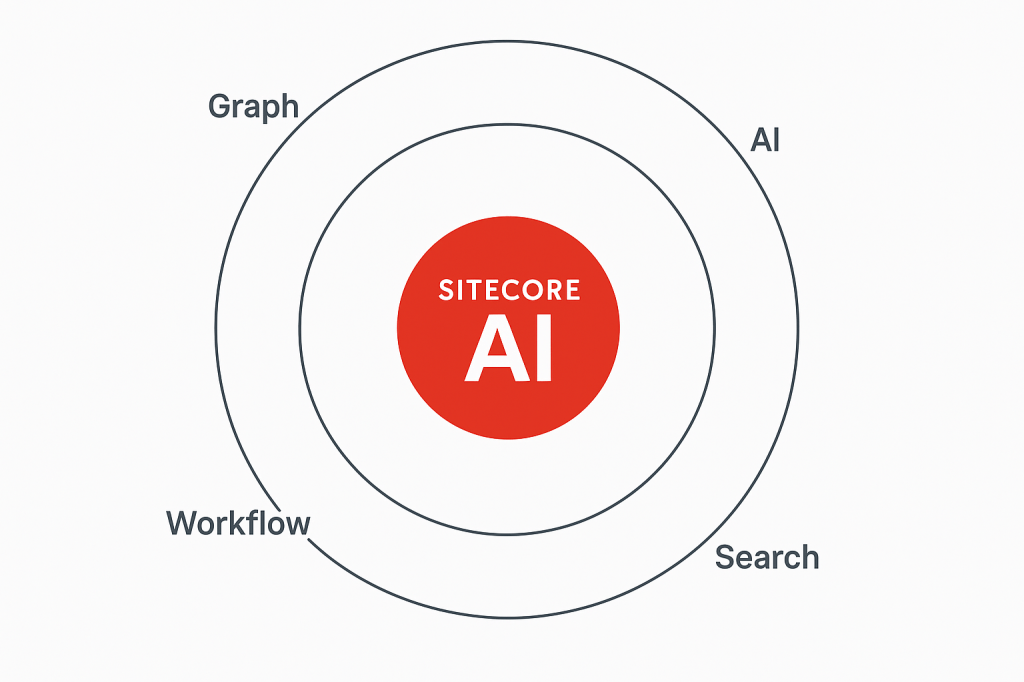
How AI Evolves When It Can “See” the Graph
AI becomes far more useful once it has context. Instead of guessing, it can reason (with you and itself).

It can:
- Highlight broken or risky relationships
- Warn when a rights expiry impacts upcoming campaigns
- Propose in context missing metadata
- Identify inconsistencies across variants
- Draft component updates based on product data
- Help teams understand change impact before they make the change
AI stops being a writing assistant and becomes a partner in content operations.
Real-World Examples
Retail: A product name change triggers an instant view of affected PDPs, category pages, email templates, social variants and feeds.
Travel: Updating a city description identifies every itinerary, POI and article referencing that location hierarchy.
Healthcare: A clinical update automatically routes through compliance and lists all downstream content requiring review.
These are just some examples to give you an idea of the connected data possibilities.
Why 2026 Might Be the Turning Point
All the building blocks already exist inside Content Hub. The question is whether SitecoreAI elevates the graph into the platform backbone.
If it does, content becomes connected by design. Consistency stops being a manual effort.
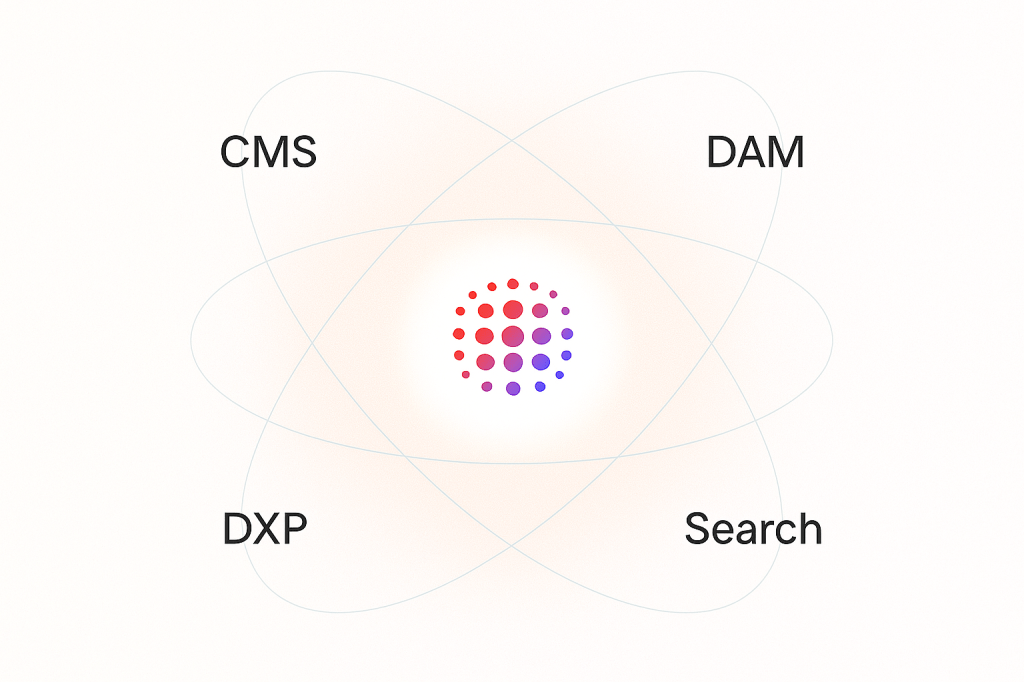
And the CMS, DAM and product data stores finally operate as one system.
This would for me be the biggest architectural shift Sitecore has made in years and the one that unlocks the most value.



 Tim's Blog
Leave a Reply