

Here is how modern platforms are finally fixing it
For years the MACH movement promised a better way to build digital experiences. Swap the monolith for collections of specialised services.
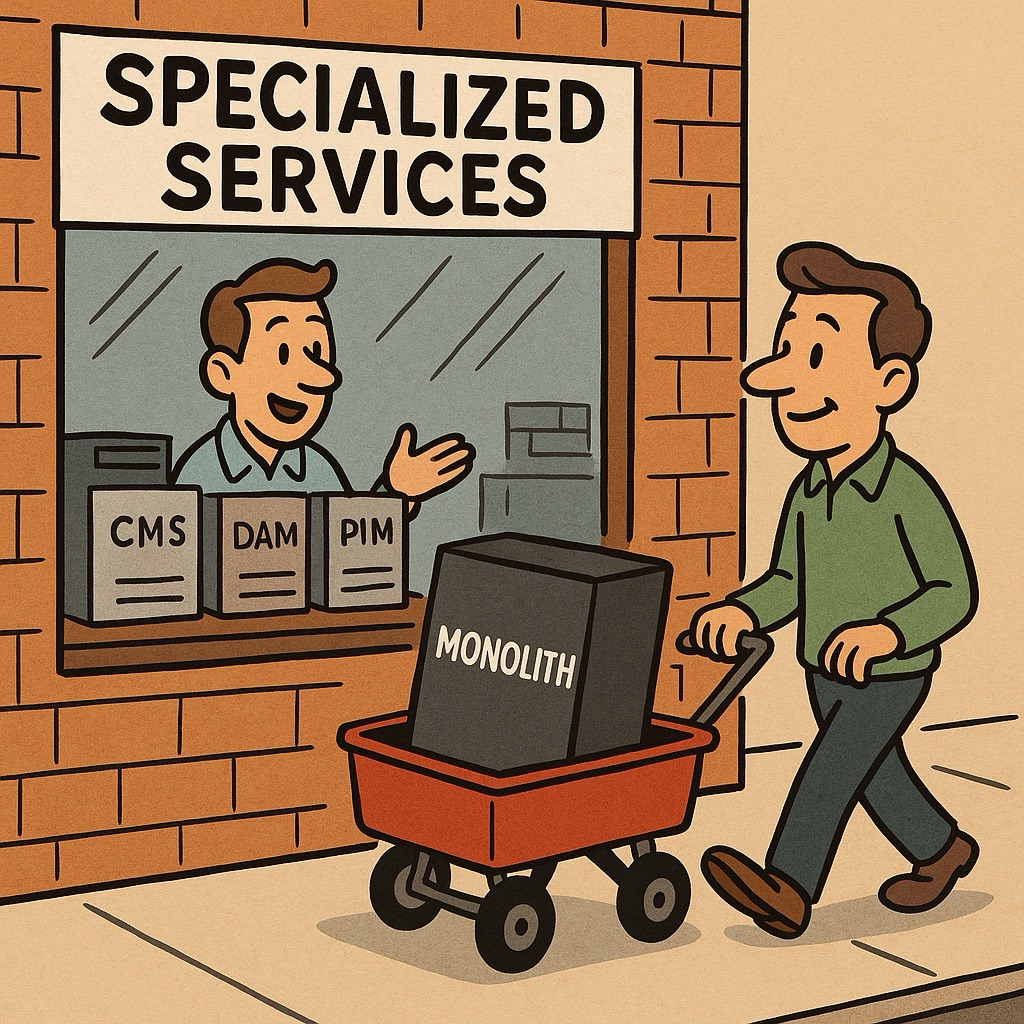
Pick the best CMS, the best DAM, the best PIM, the best search, the best personalisation engine. Connect everything through APIs and enjoy unlimited flexibility.
I’ll be the first to admit the story is compelling and actually made all vendors grow up.

In reality many organisations discovered something else. More choice meant more complexity. Even when each product worked well on its own, the experience of running campaigns across multiple platforms became heavy. Teams often found themselves coordinating content across five or six tools, each with its own workflows, metadata model and permissions.
MACH delivered composability. It did not always deliver orchestration.

That is now changing.
This post looks at why orchestration became the biggest MACH challenge and how new architectural patterns and modern platforms are finally solving it.
Why orchestration became the missing piece
The moment a business adopted a MACH stack several pain points appeared.
- Content lived in multiple places. The CMS held some content. The PIM held product data. The DAM held images and video. None of these spoke the same language.
- Workflows drifted apart. Approvals in one system did not update the status of related items in another. Campaign teams used spreadsheets to track progress.
- Front ends needed to pull data from many APIs. Each API had its own rate limit, authentication method and response shape. This often led to custom glue code and difficult debugging.
- Monitoring became fragmented. Teams could see performance for each platform but could not view the end to end chain. If something broke between systems there was no clear trace.
The idea of ‘best of breed’ worked well. The practical reality of running a modern content supply chain did not.
What orchestration really means in a MACH world
Orchestration is not simple integration. It is the layer that connects people, platforms and processes so campaigns can move cleanly from idea to delivery.

You can think of it as four responsibilities.
- Workflow – How content is created, reviewed, translated, localised, versioned and approved across multiple systems.
- Data – How metadata stays consistent when several services hold information about the same product, asset or experience.
- Events – How one action triggers another. For example an asset created in the DAM should automatically update search and the CMS.
- Observability – How you track the entire journey from request to publication and identify bottlenecks.
When orchestration works well, teams stop worrying about which platform they are using. They focus on the work. The system handles the rest.
Patterns that finally solve MACH orchestration issues
The good news is that orchestration in MACH is not an unsolved problem anymore. Multiple patterns have matured enough to make it practical.
Event based orchestration
The most effective solution is an event bus that all systems publish to and listen from. Instead of point to point integrations you get one stream of well shaped events.
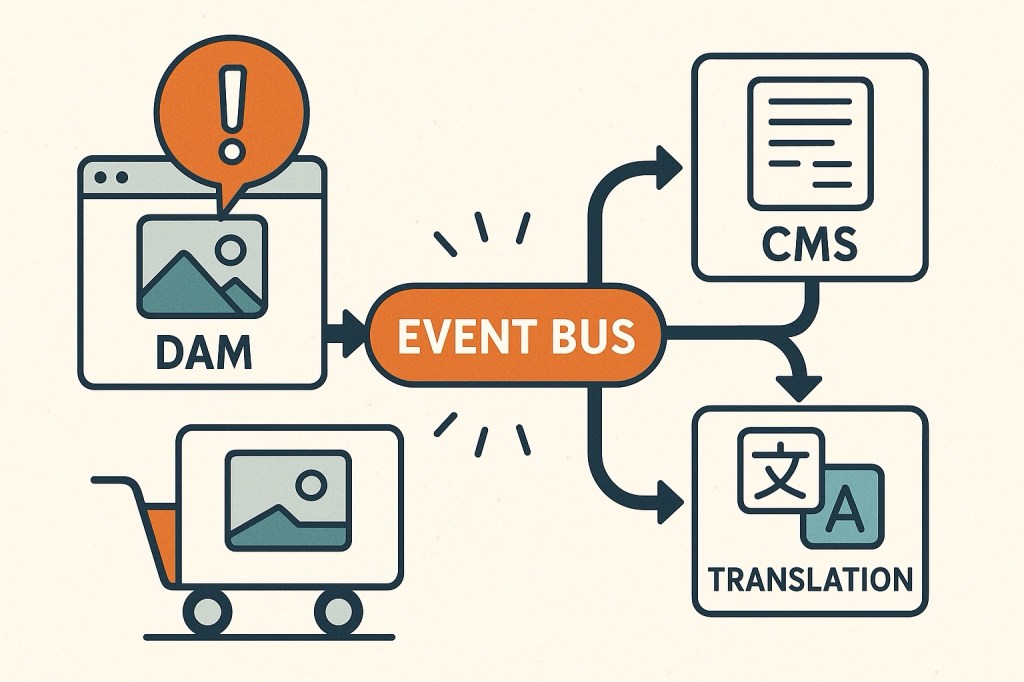
When an asset is finalised in the DAM an event is published to the bus. The CMS listens and updates linked content items. The search service indexes the asset. A translation workflow can also start automatically.
Shared semantic model
Many orchestration issues come from mismatched data models. A shared semantic or canonical model provides one vocabulary for products, assets, campaigns and experiences.
This can be stored in a graph database, a shared schema service or a rich metadata layer in a platform. The important part is that every service can reference the same identifiers and relationships.
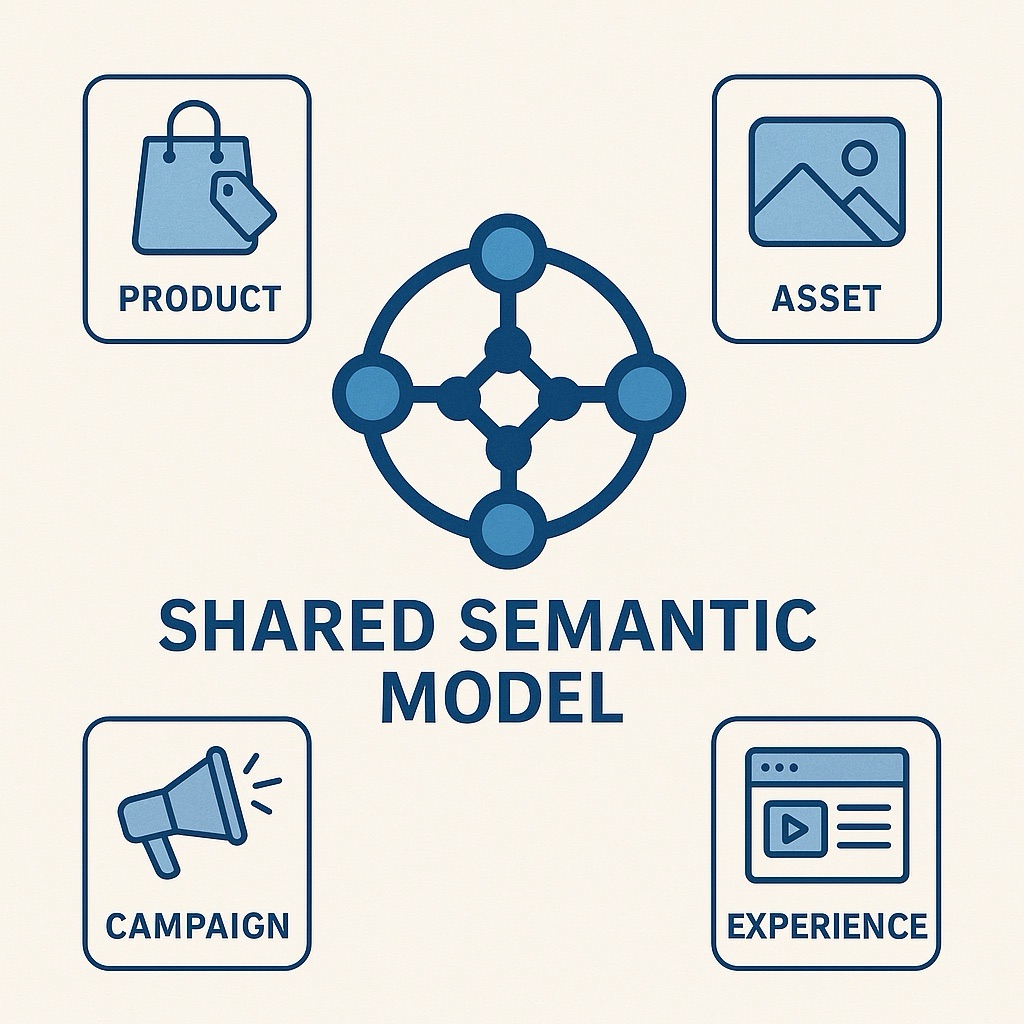
Once you have this, reuse becomes natural. Personalisation rules, product detail pages, campaign landing pages and asset collections all refer to the same objects.
API gateway or aggregated GraphQL layer
Front end teams should not need to know how many platforms sit behind the scenes. A unified API hides that complexity and returns only what they need.

A good example could be a query to fetch a campaign experience might call CMS, PIM, DAM and personalisation services behind the scenes. The gateway handles the routing and caching.
GraphQL is often the simplest approach because it can aggregate content and assets into one predictable shape.
Observability across the entire chain
The final pattern is visibility. Distributed tracing and correlation IDs reveal how long an entire request journey takes and where failures occur.
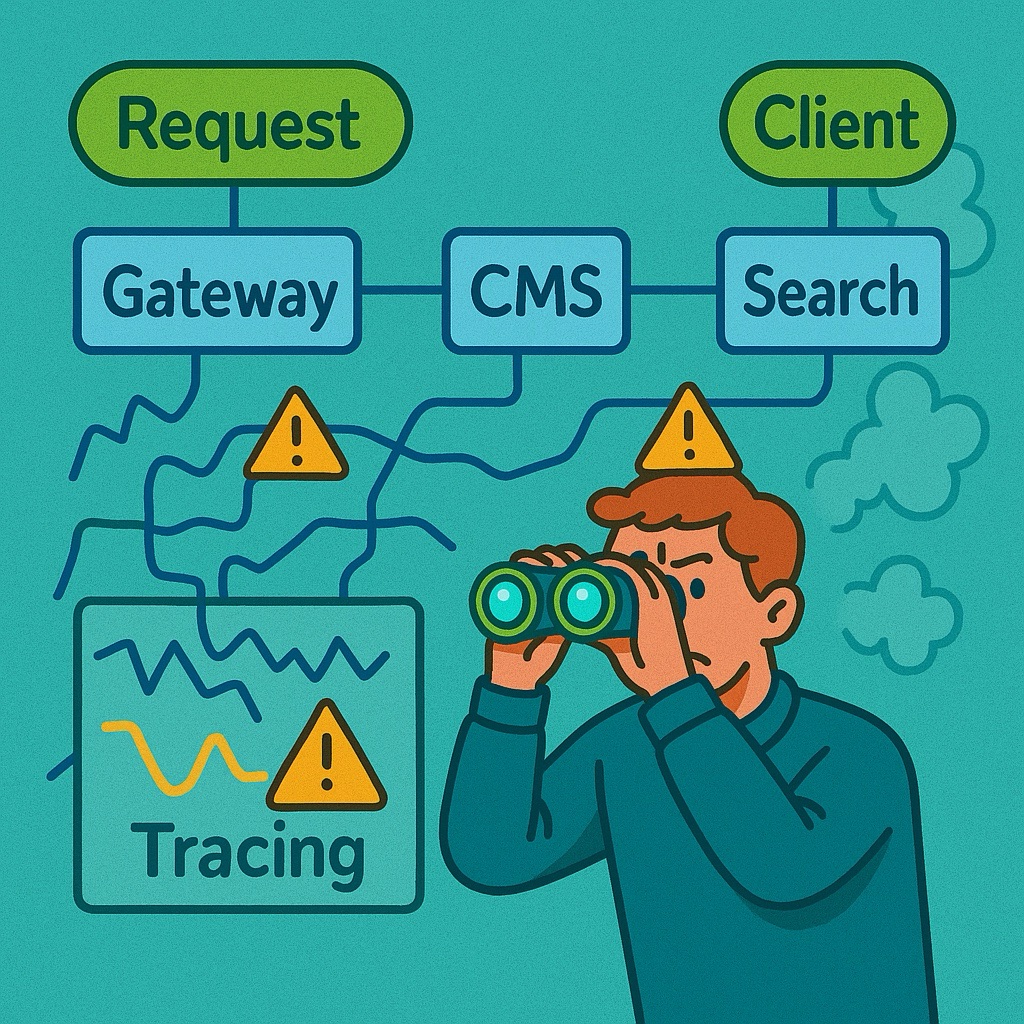
A page load can be traced through the gateway, CMS, DAM, search, personalisation and back to the client. Slow services become obvious. Data inconsistencies can be flagged.
Orchestration is only reliable when it is observable.
How modern platforms are stepping into the orchestration role
The biggest shift recently is that users have realised that platforms are no longer isolated services. They need a coordination layer above CMS, DAM, PIM and everything else. The goal is simple. Give teams one place to manage the entire content and experience lifecycle rather than stitching everything together project by project.
This is exactly where SitecoreAI changes the picture.
SitecoreAI as the orchestration hub

SitecoreAI is not just a CMS. It sits above the individual services and becomes the control point for how content moves through an organisation. It treats content creation, asset management, product data, personalisation, planning and publishing as a single flow rather than a set of disconnected tasks.
Three things make this possible.
Shared intelligence
SitecoreAI learns from the structure of your content, the metadata in your DAM, the product information in your PIM and the behaviour patterns in your CDP. It does not need all of these to live inside Sitecore. It can discover them through connectors and APIs. Once it understands the relationships it becomes the place where everything joins up.
Central workflow
Instead of workflows living inside each product, SitecoreAI provides one orchestration layer that spans all sources. A campaign can begin with a brief, trigger asset creation, validate product data, request translations, update content variants and publish to channels. The team sees one workflow even when the work touches several external systems.
Unified content operations
SitecoreAI functions like a true operations hub. It becomes the single source of planning, approvals, metadata enrichment, distribution and measurement. Content might be stored in different systems but the operational logic sits in one place. That removes the friction most MACH implementations struggled with.
Orchestration regardless of where the data lives
A common concern with orchestration platforms is vendor lock in. SitecoreAI avoids that trap. It does not require you to move everything into its own storage. It connects to existing systems and treats them as part of the supply chain.
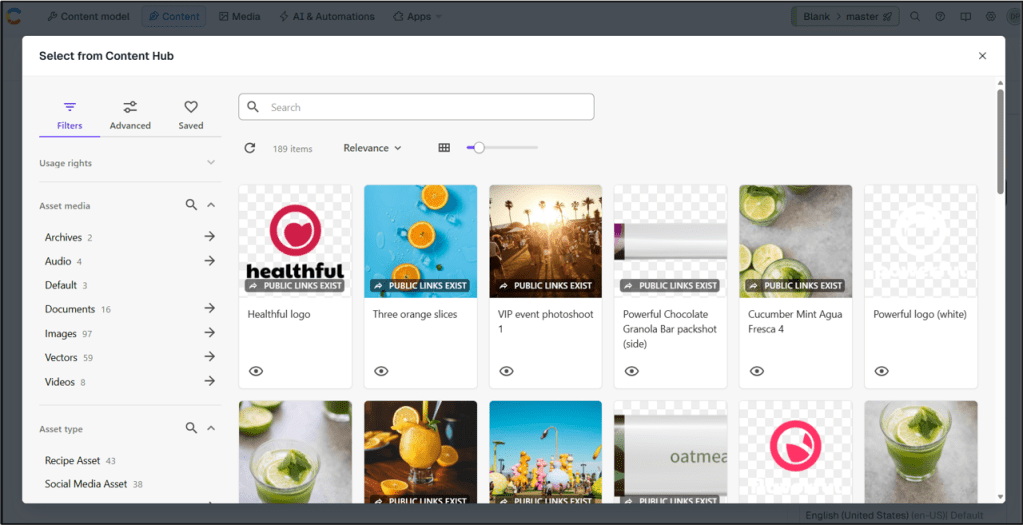
- If your DAM lives elsewhere SitecoreAI still orchestrates asset approvals and reuse.
- If your PIM is a third party platform SitecoreAI still links product data to content and campaigns.
- If your translation stack sits outside SitecoreAI the workflow still routes tasks, monitors progress and keeps metadata aligned.
- If your delivery layer is fully headless SitecoreAI still manages variants, audience targeting and version control.
This allows organisations to modernise at their own pace while gaining the benefits of a unified operations layer. You keep the composability of MACH without the operational overhead.
A complete view of the content supply chain
The final advantage is visibility. SitecoreAI introduces a consolidated view across all services. You can see where assets are used, which teams are blocking a workflow, which content variants are outdated, whether product data is missing, or which campaigns are stuck in translation.
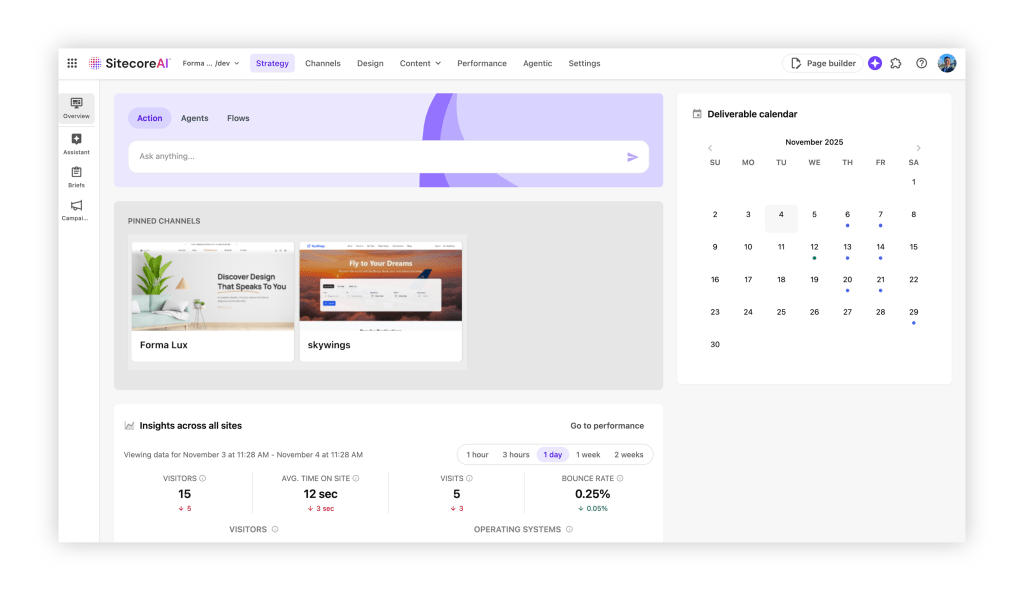
This level of observability was almost impossible in traditional MACH stacks because no single system captured the entire journey.
SitecoreAI becomes the place where everything is measured and coordinated.


 Tim's Blog
Leave a Reply