

Introduction
When someone talks about digital-asset management (DAM), they are probably referring to a “library” of images, videos or documents. These assets are tagged, stored, approved, and then pushed to channels.
But in today’s world of AI, personalisation, headless architectures and composable stacks, the requirements for enterprises have changed. The old DAM model no longer captures what they need.
As this greatly timed CMSWire article asserts: “The DAM era is over. The next generation of content management isn’t about files – it’s about intelligence, context and trust.”
Sitecore Content Hub was always so much more than a DAM. I have written countless blogs on everything it could do.
Now though it’s changed.
With the launch of SitecoreAI, it’s not just about “managing assets” – it’s about injecting intelligence throughout the content-to-experience pipeline.
Why the traditional DAM model is running out of steam

The CMSWire piece identifies three big shifts:
- A content explosion (volume + velocity) makes manual tagging/asset-upload workflows unimaginable.
- AI-generated content (and multiple channel endpoints) mean you need not just storage but context, governance and integration.
- Siloed content libraries are no longer sufficient. Content must connect with product data (PIM). It should also connect with customer profiles (CDP) and campaigns (MRM). Finally, it must be consumed across experiences.
For Sitecore environments this means: if you’ve just plugged in a DAM next to your CMS, you’re likely missing the next wave. This wave is where content is dynamically assembled. It is personalised and governed by intelligence.
Content Hub’s trajectory: from library to content operations platform
Let’s map some of the capability evolution in Sitecore Content Hub:
| Capability | Traditional DAM view | Content Hub (modern) view |
|---|---|---|
| Metadata/Tagging | Manual tagging of images/videos | AI-assisted tagging, “grounded image tagging” for bulk metadata. |
| Governance/Rights | Licence tracking, versioning | Integrated throughout workflows: content lifecycle, archiving, store of truth for all assets. |
| File transformations | Asset conversions for web/print | Headless delivery, variant management for global/local, reuse across channels. |
| Insights & Analytics | Basic asset usage metrics | Feedback loops into performance, feeding intelligence about content efficacy. |
| Integration | DAM → CMS, maybe PIM | Fully connected to CMS (XM/XM Cloud), PIM, CDP, Search, Personalisation engines. |
In short: the emphasis is shifting from “asset management” to “content operations.” The asset library becomes one node in a mesh of content, data, and experience flows.
This means that clients who still treat a Content Hub/DAM as a “bolt-on” may be missing the strategic shift. The content layer is becoming a foundational intelligence layer.
SitecoreAI: Putting intelligence at the heart of the content-experience engine
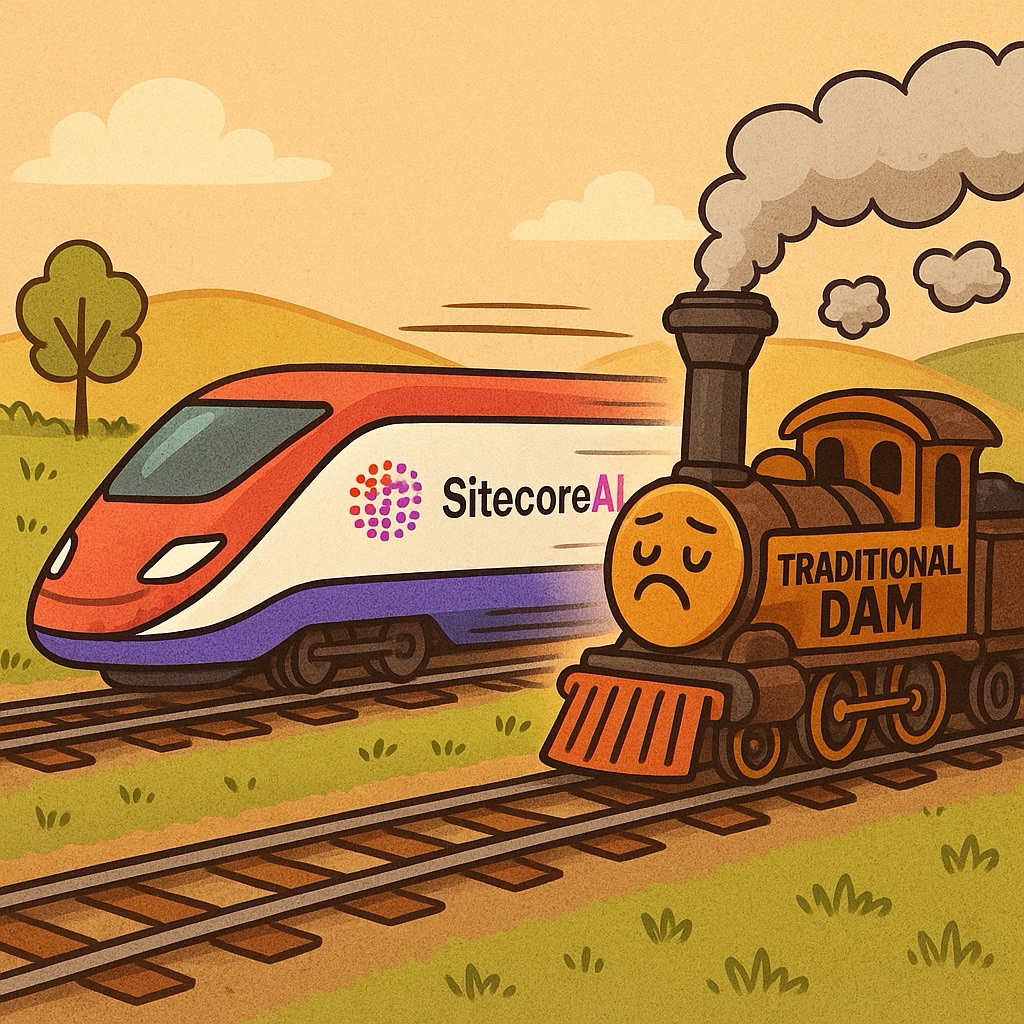
With the announcement of SitecoreAI, Sitecore has formalised that they see intelligence, not just storage or publishing, as the future.
From the Sitecore press release: “Built on the foundation of XM Cloud, SitecoreAI unifies content, data, and personalisation in a single, composable SaaS platform…”

The product team have literally built from the ground up a new solution that takes the best parts of the Sitecore SaaS products.
In my last blog I wrote that I feel Sitecore has now made its own Magic Quadrant which I named a COS (Content Operations System).
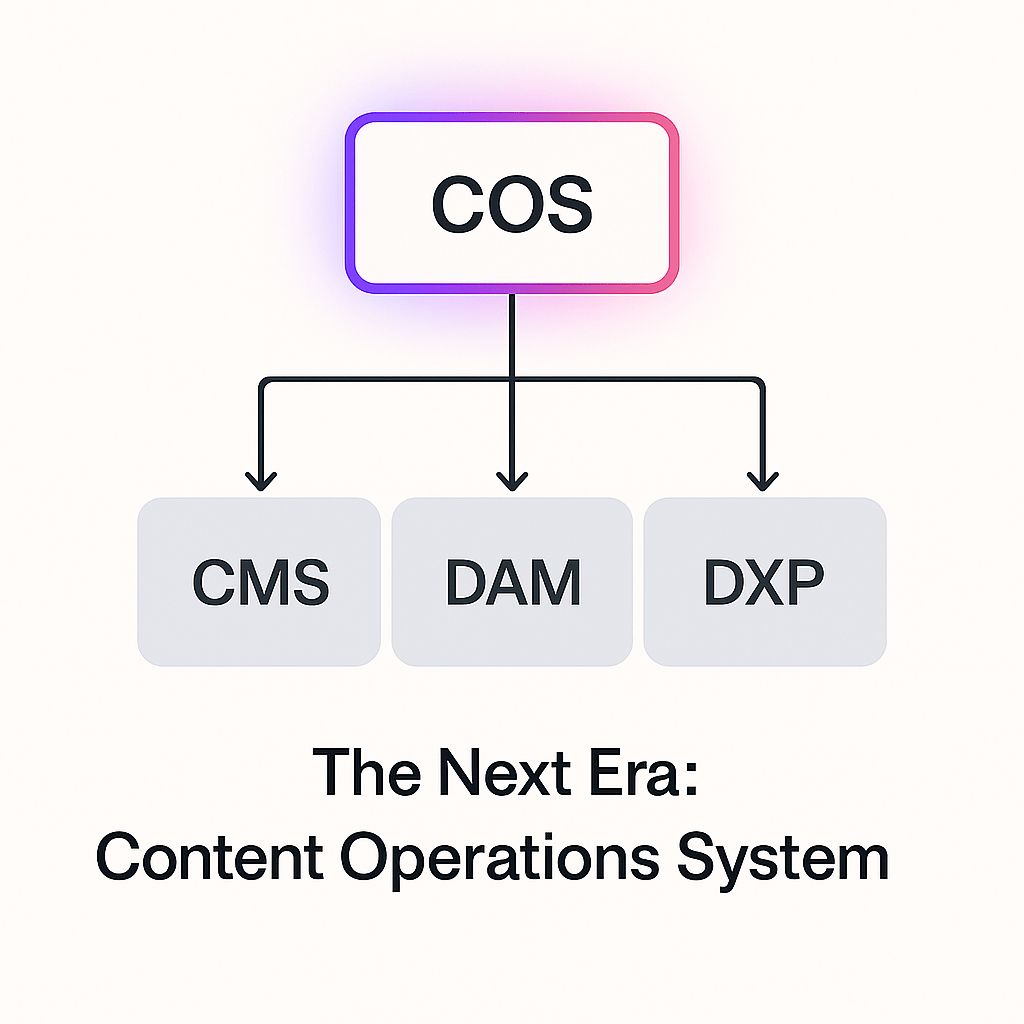
This is how I feel it’s going for Sitecore they flipped the narrative.
Putting my consultancy hat on the move from Content Hub + CMS to SitecoreAI signals that asset & content operations aren’t side-functions – they now sit at the core of the digital experience platform.
For brands, this means: if you want to deliver intelligent, personalised, adaptive experiences at scale, you’ll want your content layer to be integrated, governed and AI-ready.
Why this matters for enterprise Sitecore implementations
The content layer becomes strategic
Often clients under-invest in their asset/content operations layer (they treat DAM/Content Hub as a “nice-to-have”).
With SitecoreAI, that layer becomes mission-critical – how assets, content items, metadata, rights, variants are managed directly affects experience outcomes.
Migration and technical architecture shift
If you’re on legacy on-prem CMS/DAM/Search/Personalisation, moving to SitecoreAI gives you the path to make content operations SaaS, scalable and integrated.
You’ll want to look at content and process architecture:
- Metadata
- Taxonomies
- Asset tagging/metadata quality
- Content modelling (headless/variants)
- Rights management
- Integration to PIM/CDP
These become enablers for intelligence.
Governance, compliance & brand risk
If you feed unmanaged content into AI, you risk hallucinations, brand damage, legal exposure. SitecoreAI emphasises governance and human-in-the-loop.
You might want to build a risk register: metadata quality, rights, archiving/expiry, versioning, asset reuse across geographies, AI-generated content checks.
Skills & team structure shift
Marketers and content teams will need new capabilities: understanding AI-augmented workflows, prompt engineering, building agents, working with metrics and feedback loops, managing content ops rather than just content creation.
Conclusion
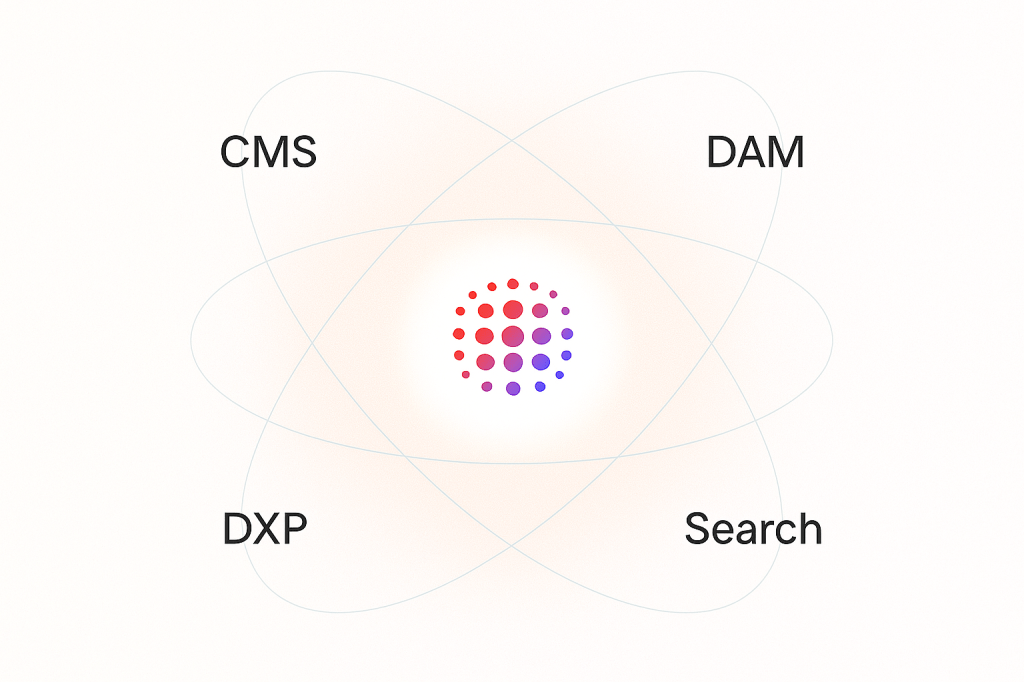
The argument that “DAM is dead” isn’t about the disappearance of asset libraries – it’s about the transformation of the asset/content layer from a passive dormitory to an active intelligence engine. And that’s exactly what Sitecore is betting on with the evolution from XM Cloud, Content Hub, CDP, Personalise and Search into SitecoreAI.
For brands and consultants working in the Sitecore ecosystem, this is a signal: content management isn’t just a CMS/DAM exercise any more – it’s a strategic lever for personalised, intelligent experiences at scale. The brands that treat their content operations like an afterthought will struggle. Those that invest in metadata, workflows, intelligence, governance and integration will be ahead.
Call-to-Action
If you’re migrating to XM Cloud, or have a Content Hub in place and want to explore how to unlock AI-powered workflows, taxonomies and agent design in SitecoreAI, let’s talk. I can help you map your content operations maturity, design a taxonomy strategy, build agentic workflows and align your asset/content layer with experience delivery.



 Tim's Blog
Leave a Reply