

When Sitecore announced SitecoreAI, it wasn’t just another product update. It was a statement of intent. This represented a fundamental shift from a suite of connected tools to a unified, AI-driven content and experience platform.
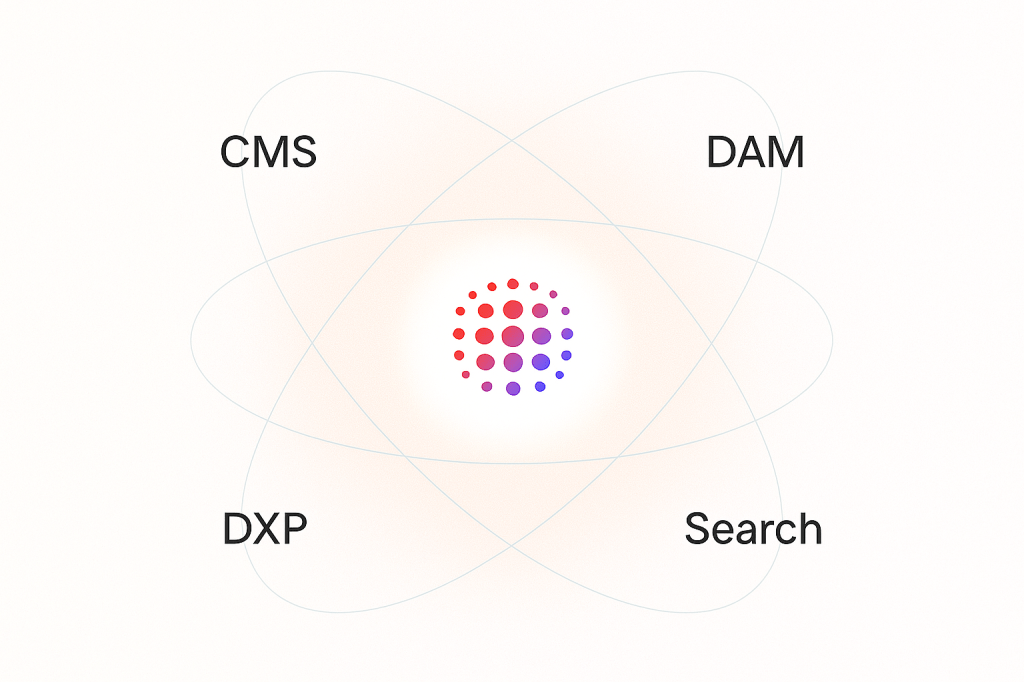
In one move, Sitecore effectively unified its CMS, DAM, DXP, search, personalisation, and optimisation capabilities. This was achieved under a single roof. It is powered by AI agents and a shared content model.

For digital strategists, this is more than a branding exercise. It signals the start of an era. In this era, content and experience truly converge.
But it also raises a question that no one in our industry can ignore:
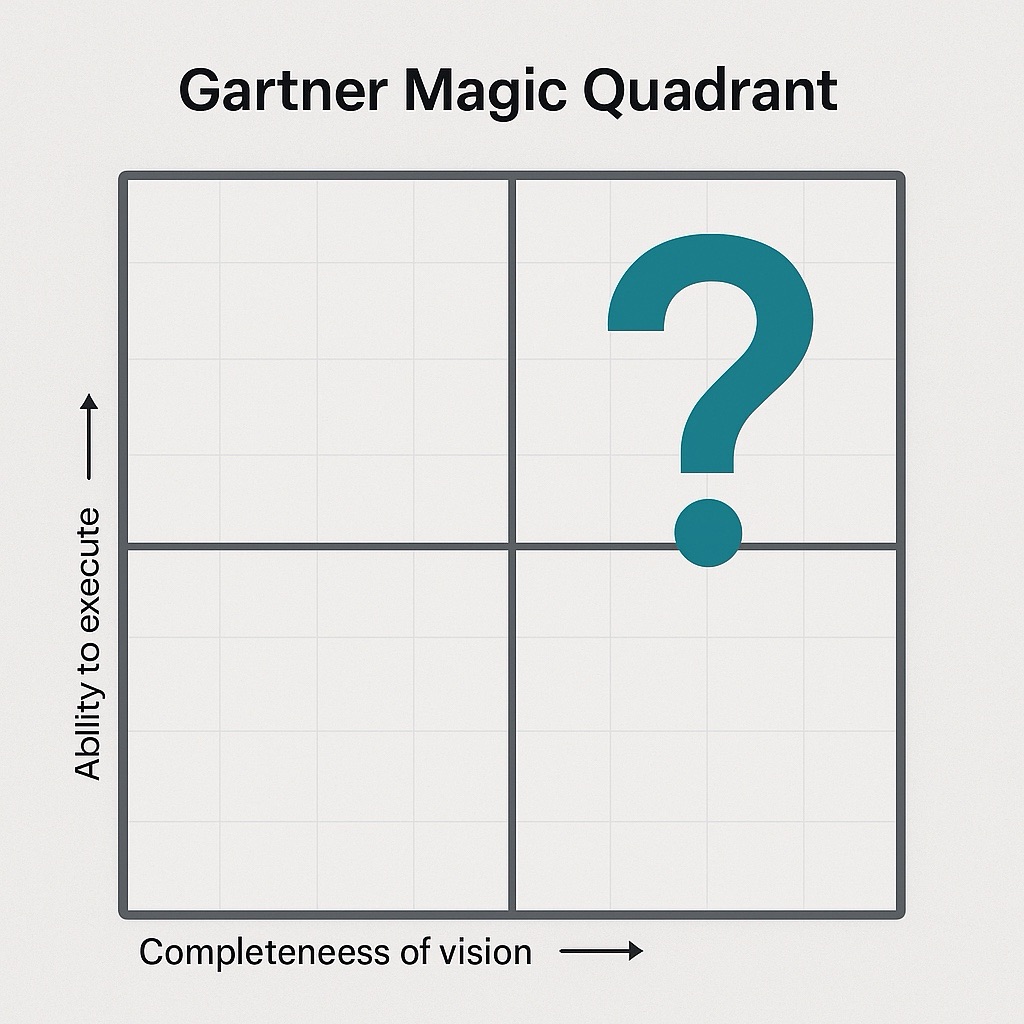
If a single platform can deliver all these capabilities in one place, how will it affect the Gartner Magic Quadrants? What will happen to the Forrester Waves that have traditionally defined the market?
A Platform That Blurs the Boundaries
For over 24 years, Sitecore has been best known for its CMS and DXP leadership. It has consistently appeared as a Leader in Gartner’s Magic Quadrant for Digital Experience Platforms. More recently, it is also recognised in the Magic Quadrant for Digital Asset Management through its Content Hub offering.
With SitecoreAI, those boundaries have blurred. Content creation, campaign planning, asset management, personalisation, search, and optimisation are now presented as one continuous workflow. Initially, there were six different interfaces and data models. Now, there is a single, composable, cloud-native environment running on Microsoft Azure.
It’s a bold move that reflects the way modern content teams actually work. Marketers don’t think in quadrants; they think in stories, campaigns, and outcomes.
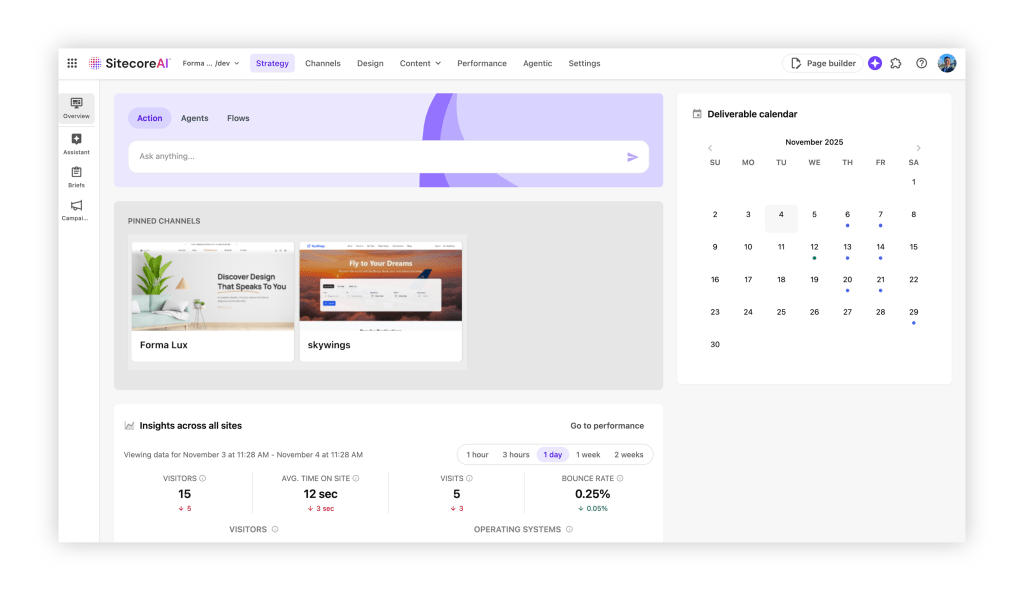
Sitecore’s strategy acknowledges that reality. It gives teams one workspace to plan, create, deliver, and measure content. AI is embedded as a collaborator rather than a bolt-on tool.
When Frameworks Meet Fluid Platforms
Analyst frameworks like Gartner’s Magic Quadrants and Forrester’s Waves have served the industry extremely well. They stay essential for organisations seeking excellence in a specific capability.
If your current priority is finding the best-in-class DAM, or re-evaluating your search and product discovery vendor, those reports are still the most reliable compass available. They provide rigour, methodology, and comparative insight that help business leaders make informed, low-risk decisions.
Where things get interesting is when a platform starts to defy categorisation. SitecoreAI isn’t simply a CMS or a DXP; it’s both – plus a DAM, a content operations hub, a personalisation engine, and a search platform. In this model, the traditional boundaries the frameworks rely on begin to dissolve.
That’s not a flaw in the frameworks. It’s a reflection of how quickly digital experience technology is evolving. The Quadrants and Waves still excel at assessing depth, while platforms like SitecoreAI ask us to also evaluate breadth and integration. Both views matter – they just answer different questions.
So perhaps the right conclusion isn’t that the quadrants are irrelevant, but that their context is changing. They continue to serve leaders focused on point solutions. However, unified platforms require a new evaluative lens. This lens looks at content operations holistically, not just by function.
Sitecore’s Strategic Clarity
Sitecore deserves real credit for having the conviction to simplify a complex story.
Rather than chasing multiple categories, the focus is to unify them around customer outcomes. These outcomes include faster campaign delivery, consistent brand governance, measurable ROI, and embedded intelligence.
This focus matters. Marketing teams today struggle with fragmentation – juggling half a dozen systems just to launch a single campaign. SitecoreAI aims to remove that friction. It provides a single interface and a shared data layer. This keeps every stakeholder in sync.
For business leaders, that translates to clearer accountability and faster decision-making. For marketers, it means less time navigating tools and more time shaping strategy. For IT, it means a simpler, composable SaaS architecture with fewer integrations to maintain.
It’s a decisive shift from selling technology components to delivering an operational model. In doing so, Sitecore has arguably redefined what a content platform can be.
What This Means for Digital Strategists
For strategists and marketing leaders, the takeaway is clear:
If your need is focused and functional, the Magic Quadrants and Waves remain indispensable. Use them to select the strongest vendor in that specific domain.
If your goal is unified content operations, begin by asking a different set of questions. Inquire about integration, workflow, and observability. Consider AI orchestration across the entire content lifecycle.
This is where SitecoreAI stands out. It’s built for the organisations that see content as a continuous supply chain – from ideation to insight – rather than a set of discrete tools stitched together by middleware.
A New Category Emerging
Sitecore may have quietly done something even more profound: it might have introduced a new category that sits above CMS, DAM, and DXP – what we could call a Content Operations System (COS).
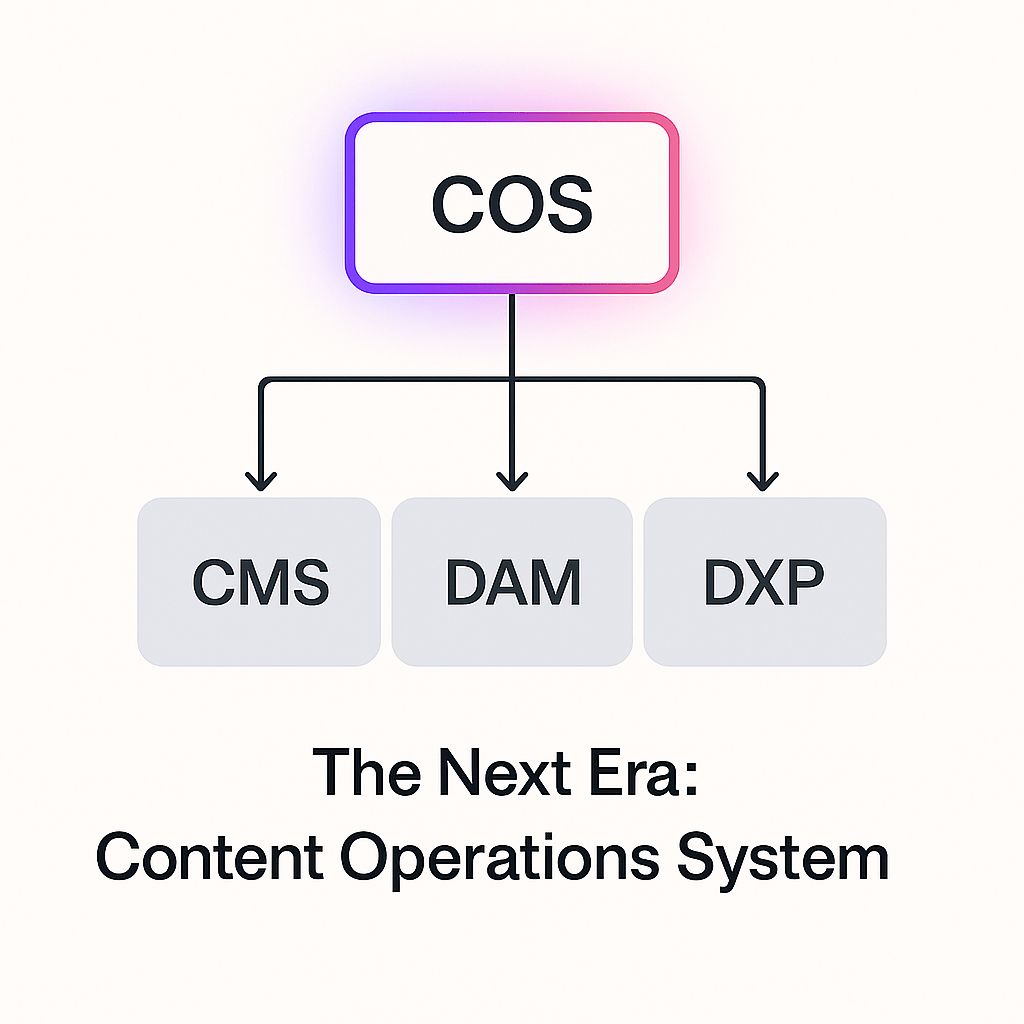
A COS (yes that’s what im calling it) connects planning, creation, personalisation, delivery, and measurement into one governed ecosystem. It’s where creativity meets automation, and where AI augments every step instead of living on the periphery.
If that’s where the market is heading, then it’s time for analyst frameworks to evolve too. The goal is not to replace the quadrants. Instead, a new axis for integration and intelligence should be added.
Closing Thoughts
Sitecore’s unification strategy is a bold, confident move. It reflects a deep understanding of both enterprise pain points. It also reflects the market trajectory. It doesn’t make Gartner and Forrester irrelevant; it expands the conversation beyond them.
For customers seeking singular excellence, the quadrants still shine. But for those pursuing holistic transformation, all three elements must work as one. These elements are content, data, and AI. SitecoreAI may be the benchmark for what comes next.
In my opinion, Sitecore has defiantly created its own quadrant (COS). This quadrant sits above CMS, DAM, DXP, and search. It is defined by unification, intelligence, and operational visibility. But until other vendors innovate at the same level, there’s little point drawing that chart. For now, Sitecore stands largely alone in this space, occupying a position of its own making.
In short: Sitecore hasn’t broken the quadrants. It has moved beyond their edges. Sitecore may be the only one in its new box for quite some time.



 Tim's Blog
Leave a Reply