


Contentful is a powerful headless CMS that enables structured content management across multiple projects and teams. However, a common challenge organisations face is sharing content across different channels.
In this blog, I want to explore the challenges, methods, and best practices for sharing content across Contentful spaces.
Why would you want to reuse content?
Organisations using a CMS or multiple CMS platforms often have different channels that they need to build content for.
This means that teams normally work individually often recreating or duplicating content multiple times. Alternatively this could be content recreated for different brands that an organisation might own.
Some key use cases for content sharing include:
- Global & Regional Content Distribution: A central content team creates global content that needs to be localized and reused in regional spaces.
- Multi-Brand or Product Strategies: Companies managing multiple brands want to maintain a single source of truth while allowing each brand to customize content.
- Staging & Production Workflows: Sharing content between staging and production spaces for approval workflows.
- Franchise or Partner Models: A core company provides standardized content that needs to be adapted for franchises or partners.
To give a working example imagine you produce articles. You might have same authors that contribute to the articles. What happens when you need to update some information
In the picture above the same author has contributed to 3 different websites each with a disconnected information.
Now seeing the above imagine that the authors information is centrally stored. Any update will propagate the changes to anywhere that references it.
What does Contentful offer to solve this?
- Content Reusability – Contentful’s “Cross-space references” feature allows you to reuse content across different spaces within your organisation, avoiding duplication and ensuring consistency.
- Content Orchestration – This feature is part of Contentful’s content orchestration capabilities, which enable managing content and content types across various spaces.
- Centralised Management – With shared spaces, you can manage content centrally and update multiple spaces and environments with the same content.
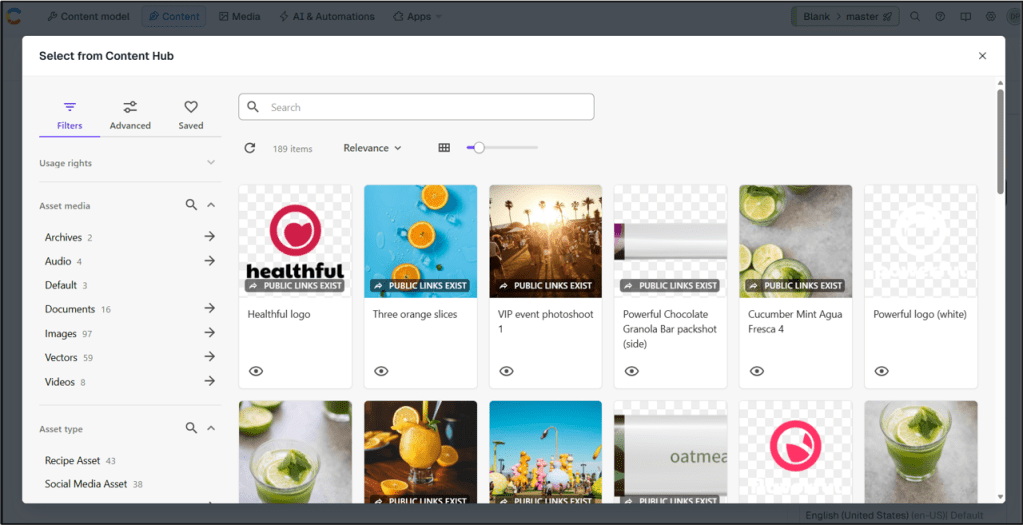
- How it Works – You can link content from one space to another using reference fields, allowing you to reuse entries or assets in multiple contexts.
- Access and Permissions – To use Cross-space references, you need to enable content orchestration for the spaces you want to link. Users in experience spaces need READ access to work with shared content in platform spaces, and you can set up permissions to control editing access to shared content.

Best Practices for Content Sharing Across Spaces
Use a Consistent Content Model – Ensure that content types, fields, and structure are standardised across spaces to prevent mapping issues.
Track Changes Efficiently – If syncing content, maintain an audit log of changes.
Consider API Rate Limits – Contentful enforces API rate limits, so plan accordingly for large-scale synchronization. Use the CDA as much as possible, however this means the shared space content needs to be published.
Evaluate Read vs. Write Needs – If you only need to read content across spaces, APIs may be sufficient.
Security & Access Control – Ensure that API tokens and webhook endpoints are secured to prevent unauthorised access.
Conclusion
Sharing content across Contentful spaces is natively supported but requires you to have thought through your content types.
There are some restrictions but it will enable you to centralise content effectively. One of the biggest issues we found though was if the reference from the linked space needs to have custom views (app framework). This is not supported.


 Tim's Blog
Leave a Reply