

In today’s hotel and leisure industry, marketing teams face growing pressure to deliver hyper personalised, brand-consistent content across more channels than ever before.
Hotel groups with multiple brands and hundreds of locations must launch and manage seasonal campaigns, loyalty offers, in-property print materials, and digital experiences – all while catering to diverse regional markets.
Doing this manually is expensive, slow, and often inconsistent. This is where creative automation becomes a powerful enabler for hospitality brands.
I have personally seen this before where global brands need to have expensive creative agencies on retainer.

Just to make very simple edits to creative documents. I saw simple text changes or product changes on an advertisement take days to complete and cost thousands.
Where the template structure itself doesn’t change and it’s only a change to the content.
I’m pretty sure every global brands has this problem and to be honest what creative what’s to just make minor changes. They want to be creating something inspirational or storytelling not boring repetitive work.
Creative Automation
Creative automation refers to the use of smart templates, data, and integrated design tools to automatically generate and adapt creative assets at scale. From a single master design, brands can create dozens – even hundreds – of personalized variations for print, digital, or social channels.

This technology transforms the marketing supply chain, helping teams move faster, stay on-brand, and localize content efficiently.
Why Hospitality Needs Creative Automation
Hospitality is very complex and in this blog I want to concentrate on hotels in this example. All hotels could have these similar problems including –
- Large hotel groups may manage multiple brands (including similar and different brand identities)
- Thousands of properties (use same assets but different information)
- A wide variety of guest segments – from luxury to budget travelers
- Hundreds of thousands of staff (business cards must be a headache)
- Digital Signage (reception, rooms, lifts, everywhere a guest will go)
- Restaurant Menus (same menus, different menus, everyday changes based on product availability)
All of the above results in this – how to scale content production without scaling cost or complexity. This is where creative automation is key.
Creative automation offers a strategic solution, delivering four key benefits:
- Cost Efficiency and Speed – Rather than manually producing every creative variant, automation allows teams to build smart templates that can automatically generate local or personalized versions. This drastically reduces production time and agency costs, while freeing up designers to focus on high-impact creative work.
- Personalisation at Scale – Modern travelers expect marketing to speak to them as individuals. Whether it’s a regional promotion, language variation, or loyalty/points-tier offer, creative automation allows brands to dynamically tailor content to different audiences – without redesigning each asset from scratch.
- Brand Consistency – Maintaining a strong and cohesive brand identity is difficult when working across numerous teams, agencies, and regions. With smart templates and centralized content control, brands can ensure that every visual – whether print or digital – adheres to brand guidelines.
- Omnichannel Content Delivery – Guests engage with hotels across multiple channels – email, social, booking sites, mobile apps, in-room signage, and more. Creative automation makes it possible to adapt a single campaign across all formats, sizes, and platforms while ensuring visual consistency and quick deployment.
Asset Types in Hospitality – and How They Can Be Shared Across Brands
Hotel groups produce a wide variety of content to serve customers globally, from digital media to print signage, each tailored for different guest touchpoints. These assets typically fall into a few major categories:
Types of Marketing and Guest-Facing Assets
| Category | Examples |
|---|---|
| Digital Ads | Display banners, social media graphics, retargeting creatives |
| Email Content | Promotional headers, loyalty offers, dynamic content blocks |
| Website Assets | Homepage takeovers, booking page visuals, destination spotlights |
| Print Collateral | Flyers, brochures, in-room menus, welcome letters |
| On-Property Signage | Wayfinding signs, event posters, room door hangers |
| Sales & B2B | Hotel fact sheets, pitch decks, trade show materials |
| Local Campaigns | Region-specific promotions, co-branded partner campaigns |
| Video/Animated | Short promo clips, digital lobby signage loops, social reels |
Shared Templates, Unique Expressions
In a traditional setup, each sub-brand or property might recreate these assets independently, leading to duplication, higher cost, and inconsistent execution. But with creative automation, brands can shift to a template-based model:
- Master templates live centrally in the creative automation content hub
- Each template includes brand rules (logos, fonts, spacing)
- Local teams or marketers choose a template, plug in relevant data (like location, offers, images), and generate a finished, on-brand creative

Cross-Brand Content Harmony
By using shared smart templates:
- Central marketing controls the brand DNA and template quality
- Local teams focus on relevance, not design mechanics
- Global rollouts become faster and more coordinated
- Brand assets evolve consistently over time, with version control and governance
This balance of shared structure and local freedom is what allows hospitality groups to scale their content – without compromising brand equity or customer experience.
Opportunity by connecting Content Hub with Creative Automation
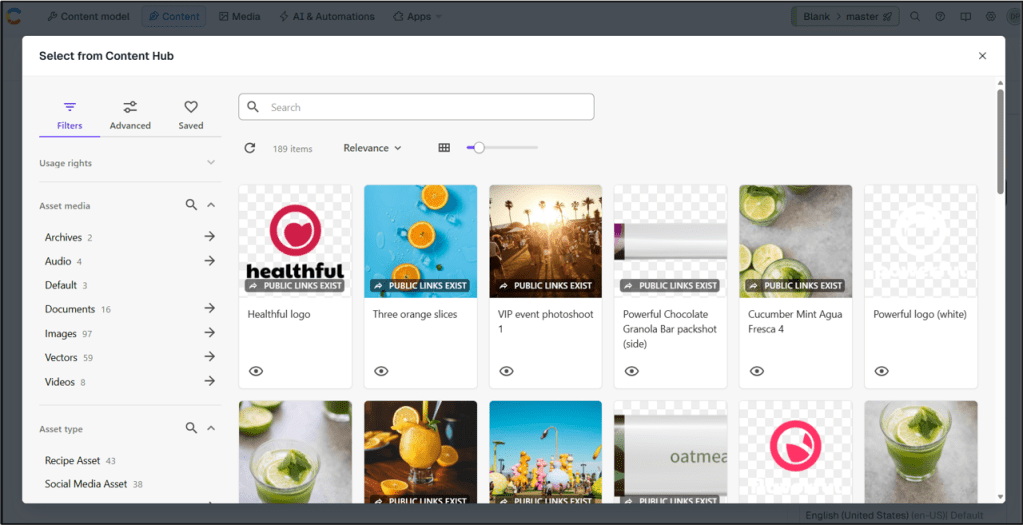
As I have blogged before users can leverage Sitecore Content Hub (to do anything really, but) as a centralized repository and planning tool. Starting with the DAM as a foundation, then when this is established in the business activate additional integrated features, these include:
- CHILI GraFx Publisher for automated print generation (menus, flyers, signage)
- CHILI GraFx Studio for digital creatives (banners, email headers, social)
This allows:
- Localized, brand-compliant creative across teams
- Speed-to-market for global campaigns
- Automated resizing and personalization
- One-click asset creation for new openings or promotions
This can all result in
Faster time to market
Roll out brand updates easily
Reduced production costs
Less platforms to use and manage
Reusable brand assets
Reducing in design errors
Final Thoughts
Creative automation is no longer a nice-to-have for hospitality (or any) businesses – it’s an essential component of modern marketing. In a fast-paced, personalization-driven world, brands must be able to scale campaigns while maintaining control over messaging, brand, and quality. Whether you’re managing five brands or fifteen, serving one region or a hundred, creative automation helps you move from chaos to clarity.
If your organisation already uses a content platform like Sitecore Content Hub, you’re halfway there. Adding tools like GraFx Publisher and GraFx Studio brings you into the next phase: automated, on-brand, personalized creative at scale.
Also I have a very similar use case already in the food services industry – https://timmarsh.co.uk/2024/04/22/leveraging-creative-automation-in-the-food-services-industry/
I’m writing this blog while visiting Dubai with my family. The point I’m trying to make in this literally jumped out to me in the following photo.

Everywhere in the UAE normally provides literature in English and Arabic. However tourists and residents come from all over the world. I can imagine they all have a problem with creative automation.


 Tim's Blog
Leave a Reply