


For nearly a year I have been working on a major project to revolutionise how a food services company enables all of its internal customers. The internal customers either manage one or more of the 7500 locations and need to build menus and information sheets on a daily basis.
The customer came to us with the problem and they wanted a future looking solution that is ready for the a global rollout.
Disclaimer
This blog is anonymous of the customer and I’m writing it to show others in the community that a unique solution on Content Hub. The project is still ongoing and future blogs may cover advanced features.
The customer problem
The customer already had a solution that has been used for a number of years. The following factors meant they needed a new solution:
- New templates or adjustments to existing ones may require weeks and months to be deployed
- The solution was deployed to a few regions however they need a global scale and availability
- Future-looking architecture is required
The tools and architecture
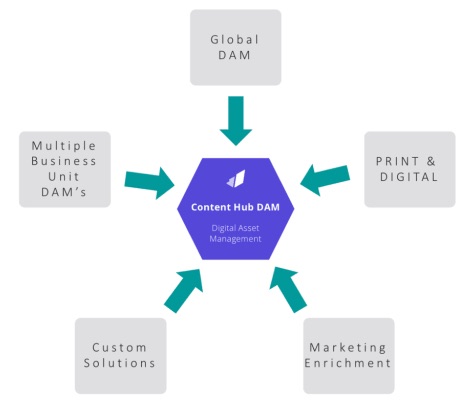
Sitecore Content Hub with the added Sitecore Content Publisher module was selected by the client. Content Hub was selected as they wanted to also leverage an enterprise DAM globally for various business units and teams.
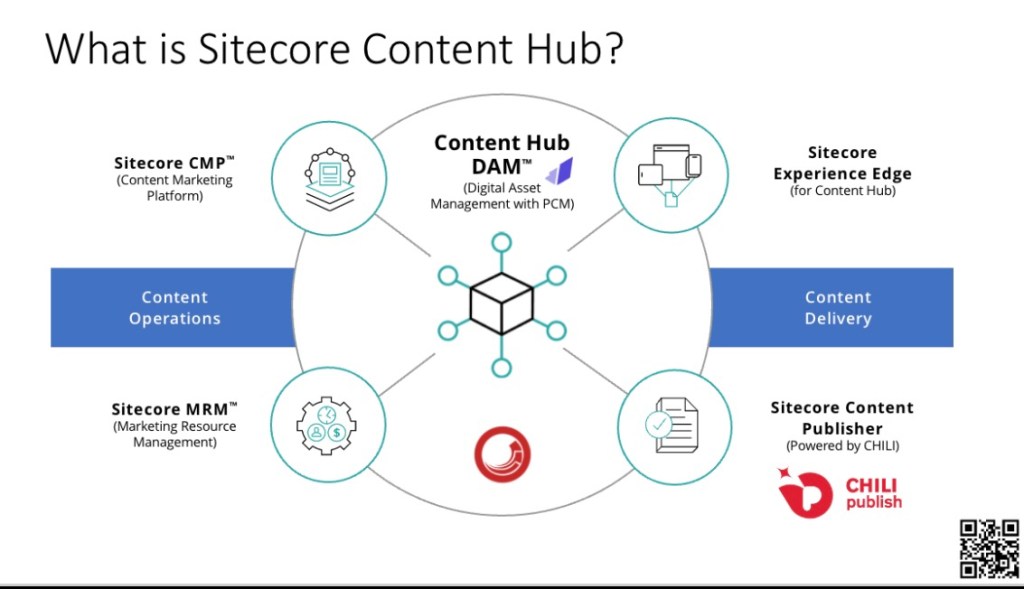
For the creative automation they also required custom react components and serverless functions due to complex data requirements. Essentially they had tens of thousands of products that can be made into endless combinations.
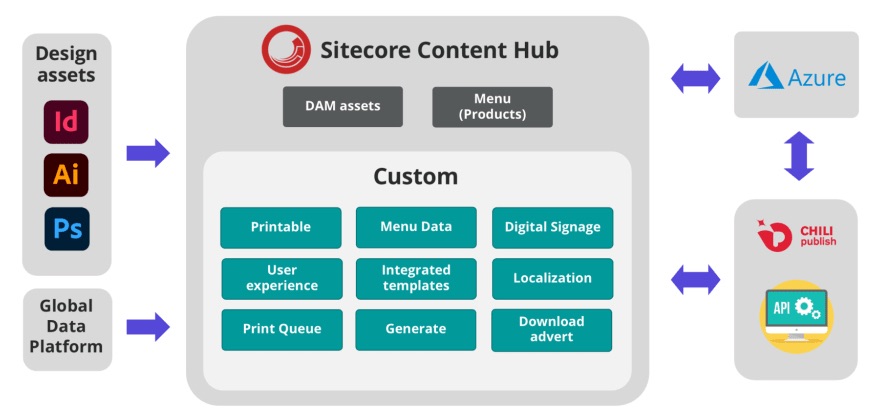
The out of the box Sitecore Content Publisher module in Content Hub is fine for one type of the customers publications. However this customer has 10 different types that each have different business logic.
Users connect to the platform and based on permissions see the available services in the DAM. As mentioned this solution also serves other parts of the business as a DAM.
Problems and how we resolved them
These will be detailed in a future blog post but ultimately we had issues with mass data and performance.
Each location only takes a subset of the endless combinations of products. Data is changing on a daily basis and managers can select different everyday. We need to have the latest information for a date and location, however if they come back to update it needs to show current data.

Very early on we had a North Star that we aimed for and while we got there we had to sometimes change direction.
Our original method meant loading all data into Content Hub for resiliency but the sheer volume of changes meant processing was occurring at all times. Performance issues was something that caught us off guard. Due to the sheer volume of daily changes these were bigger than anticipated and this caused processing to occur 24 hours per day. Combined with intensive operations meant slowness at random times.
The good news is we identified the issues and everytime we fixed an issue meant performance improved.
We made changes to all areas in an agile way as soon as we identified where issues were occurring. A good KPI was that from our first release (V1) to where we are today (V2) is the end to end journey time to create.
V1 was taking around 4 minutes, where V2 now takes on average 2:30. This is following exactly the same steps.
All the changes we made were to internal processes followed a marginal gain approach.
Not one change solves everything however small targeting changes make a small difference which add up to a lot.
Conclusion
Creative automation can be a benefit for any organisation. However you need to be aware of changing requirements and technical restrictions.
Ultimately you have to be flexible as sometimes tasks can be more challenging that estimated.
While this project has been a roller coaster with some amazing highs and hard lows. I am happy to stay on and keep pushing to build the best creative automation solution.


 Tim's Blog
Leave a Reply