


In the rapidly evolving landscape of retail, managing digital assets effectively has become paramount.
Digital Asset Management (DAM) solutions have emerged as a cornerstone for businesses looking to streamline their operations, enhance brand consistency, and elevate customer experiences.
In this blog post, I will explore how DAM solutions can benefit retail businesses, weigh their pros and cons, and delve into some top choices for enterprise customers.
So, with hundreds of possible choices on the market below are the core features any DAM should have.
Benefits of DAM Solutions for Retail Businesses:
1. Centralized Asset Management:
DAM solutions provide a centralized repository for storing, organizing, and managing digital assets, including product images, videos, and marketing materials.
This centralization ensures easy access and retrieval of assets, saving time and effort for retail teams.
2. Brand Consistency:
Maintaining brand consistency across various marketing channels is vital for retail businesses.
DAM solutions enable businesses to store approved brand assets, ensuring that all marketing materials adhere to the brand guidelines. Consistent branding enhances brand recognition and trust among customers.
3. Improved Collaboration:
DAM platforms facilitate collaboration among internal teams, external partners, and vendors.
Multiple users can access, edit, and share assets in real-time, promoting seamless collaboration and reducing miscommunications.
4. Enhanced Customer Experiences:
By ensuring high-quality and consistent visuals across digital platforms, retail businesses can create compelling customer experiences.
DAM solutions enable businesses to deliver engaging content promptly, driving customer satisfaction and loyalty.
5. Cost Efficiency:
Efficient management of digital assets reduces duplication, eliminates the need for extensive manual work, and minimizes the risk of lost or misplaced files. This streamlines processes, leading to cost savings in the long run.
6. Analytics and Insights:
Many DAM solutions offer analytics features, providing valuable insights into asset usage. Retailers can track which assets are performing well, enabling data-driven decisions for future marketing campaigns.
Cons of DAM Solutions:
1. Initial Implementation Challenges:
Implementing a DAM system can be complex and time-consuming. It requires meticulous planning, data migration, and staff training, which may disrupt regular business operations during the transition period.
2. Cost of Implementation:
DAM solutions, especially those tailored for enterprise use, can be costly to implement. Small businesses with limited budgets might find it challenging to invest in high-end DAM systems.
3. Security Concerns:
The security of sensitive digital assets is a critical concern. Retailers must ensure that their chosen DAM solution provides robust security measures, including encryption and access control, to prevent unauthorized access or data breaches.
Top DAM Solutions for Enterprise Customers:
Sitecore Content Hub:
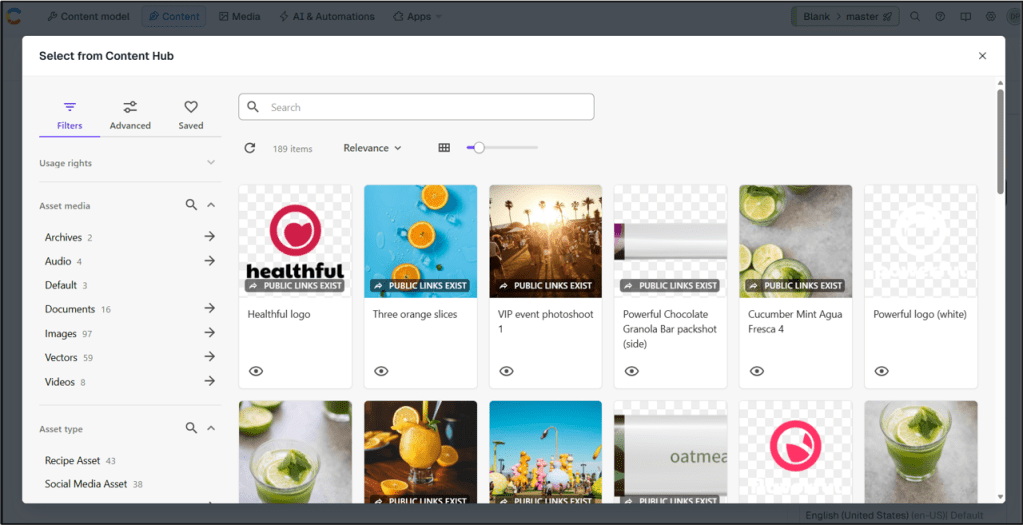
Content Hub is an extremely powerful solution that not only offers advanced features, is also allows extensive customisation. It’s more than a DAM and is central to enterprise customers who need to integrate to multiple platforms.
Adobe Experience Manager Assets:
Adobe Experience Manager Assets is a comprehensive DAM solution that offers advanced features, including AI-powered content recommendations, metadata management, and seamless integration with Adobe Creative Cloud applications.
Widen Collective:
Widen Collective is a user-friendly DAM platform known for its scalability and customization options. It offers intuitive workflows, version control, and analytics, making it a popular choice among large enterprises.
Bynder:
Bynder is a cloud-based DAM solution that focuses on simplicity and user experience. It provides robust asset management features, collaborative tools, and customizable branding options, making it suitable for retail businesses of all sizes.
In conclusion, DAM solutions play a pivotal role in transforming the retail landscape by enhancing efficiency, ensuring brand consistency, and delivering exceptional customer experiences.
While there are challenges associated with implementation and costs, the long-term benefits far outweigh the drawbacks.
By choosing the right DAM solution tailored to their needs, retail businesses can stay ahead in the competitive market, delight customers, and achieve sustainable growth.


 Tim's Blog
Leave a Reply